
-
Why Diamond Color Confuses So Many Buyers
-
What Diamond Color Actually Means
-
How Diamond Color is Graded
-
How Diamond Color Impacts Appearance
-
How Color Impacts Price
-
When It Makes Sense to Sacrifice Color
-
When You Shouldn’t Sacrifice Color
-
Buying Tips
-
Find Your Dream Diamond at Ware Jewelers–Alabama’s Favorite Jeweler!
Why Diamond Color Confuses So Many Buyers
When shopping for diamonds, most people believe that “colorless” means best. But everyday jewelry shoppers often misunderstand how diamond color grading actually works. True colorless diamonds are extremely rare. Believe it or not, almost all the diamonds you see in jewelry stores technically do possess some color!In this article, we’ll show you how diamond color is graded, explain how diamond color impacts appearance and price, and give you some pro jewelry buying tips–including some advice on when it’s safe to sacrifice a higher color grade for other important features.
What Diamond Color Actually Means
Diamonds form in nature, and nature is imperfect! Diamonds get their color from interacting with other elements and minerals as they grow. This is easy to imagine when we think about diamonds that grow far beneath the earth’s surface, but even lab diamonds come into contact with elements in the air as they form in the lab.Most diamonds have a slight yellow or brown tint. In most jewelry-quality diamonds, this tint is so faint you won’t be able to see it with the naked eye. Completely colorless diamonds are exceptionally rare–and very expensive.
Diamonds with strong tints–beyond Z on the GIA color grading scale–are called fancy color diamonds. These diamonds are vividly yellow or brown, and are typically used for fashion jewelry rather than engagement rings.
How Diamond Color Is Graded
-
The GIA Color Grading Scale
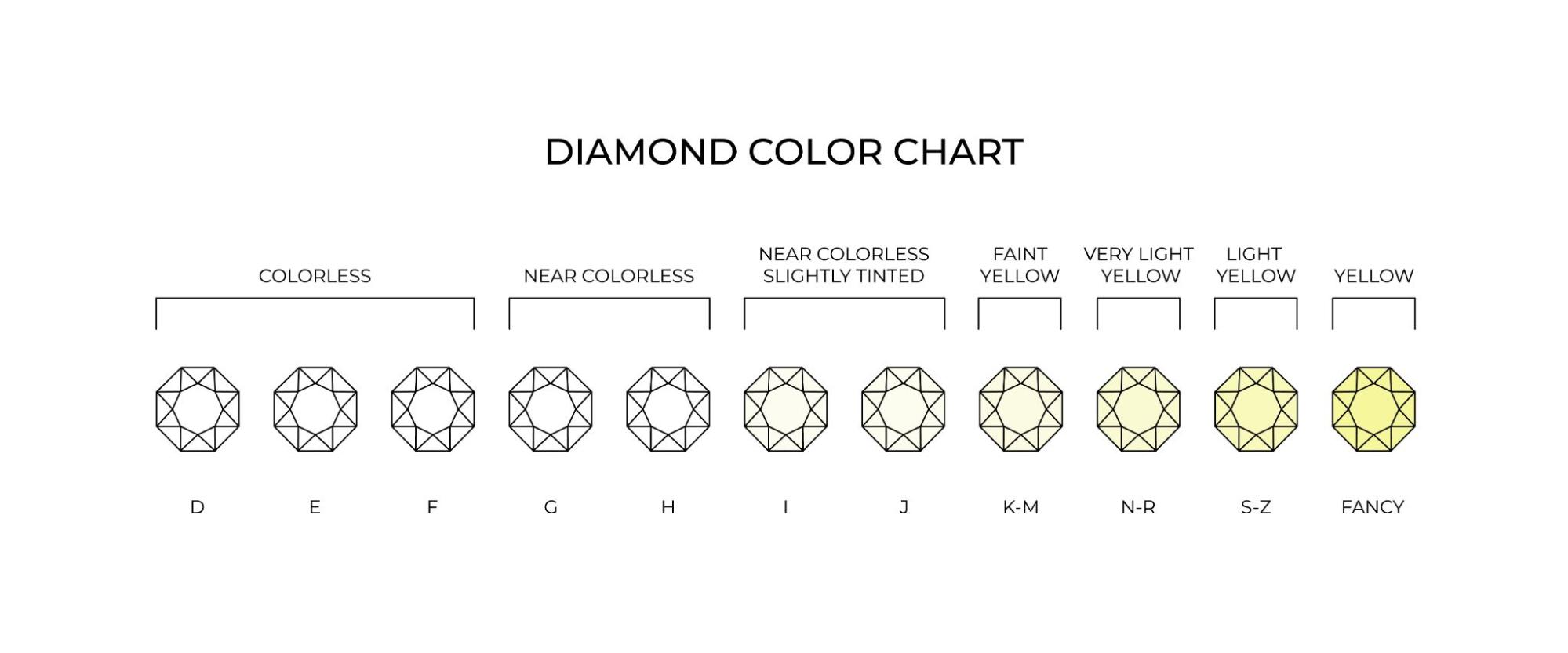
The GIA (Gemological Institute of America) developed a diamond color grading scale in the 1950s, so that gemologists and jewelers could grade diamond color in a standardized manner. Before the GIA scale, there was no universally accepted method for grading the color of a diamond. Now, almost all reputable jewelers and gemologists rely on this scale to give potential buyers more information about the quality of their diamond. It’s a letter grading scale, running from D-Z.
-
Color Grade Categories
-
Colorless: D-F
True colorless diamonds are extremely rare. Of all the color groups, these fetch the highest price per carat.
-
Near Colorless: G-J
Near colorless diamonds may show a slight warm tint under magnification. However, they appear colorless to the human eye. Diamonds within this color range are commonly used in engagement rings.
-
Faint: K-M
Faintly colored diamonds have a more visible warm tint. It’s especially noticeable in larger stones or step cut stones with wide facets (like emerald or Asscher cut diamonds). Some buyers, particularly those looking for yellow gold jewelry, like the added warmth of a faint tint.
-
Very Light: N-R
These stones have a noticeable yellow or light brown tint, even when viewing with the naked eye. Again, this is especially true in larger and/or step cut diamonds.
-
Light: S-Z
These stones have clear yellow or brown tints, and will cost the least out of any diamond color group.
-
-
How Labs Grade Color
Diamond grading labs use a very meticulous process to determine where a diamond falls on the color grading scale. Here’s how it works:
-
Control the lighting
Lighting has a huge impact on how a diamond looks. Gemologists can’t grade diamonds under different lighting conditions, or they won’t get accurate results. The lighting is carefully controlled to ensure its brightness, color, and angles are the same for every diamond the lab grades.
-
Remove the diamond from its setting (if applicable)
If the diamond is already in a piece of jewelry, the lab will remove it for accurate grading, since metal color can influence the perceived color of the diamond.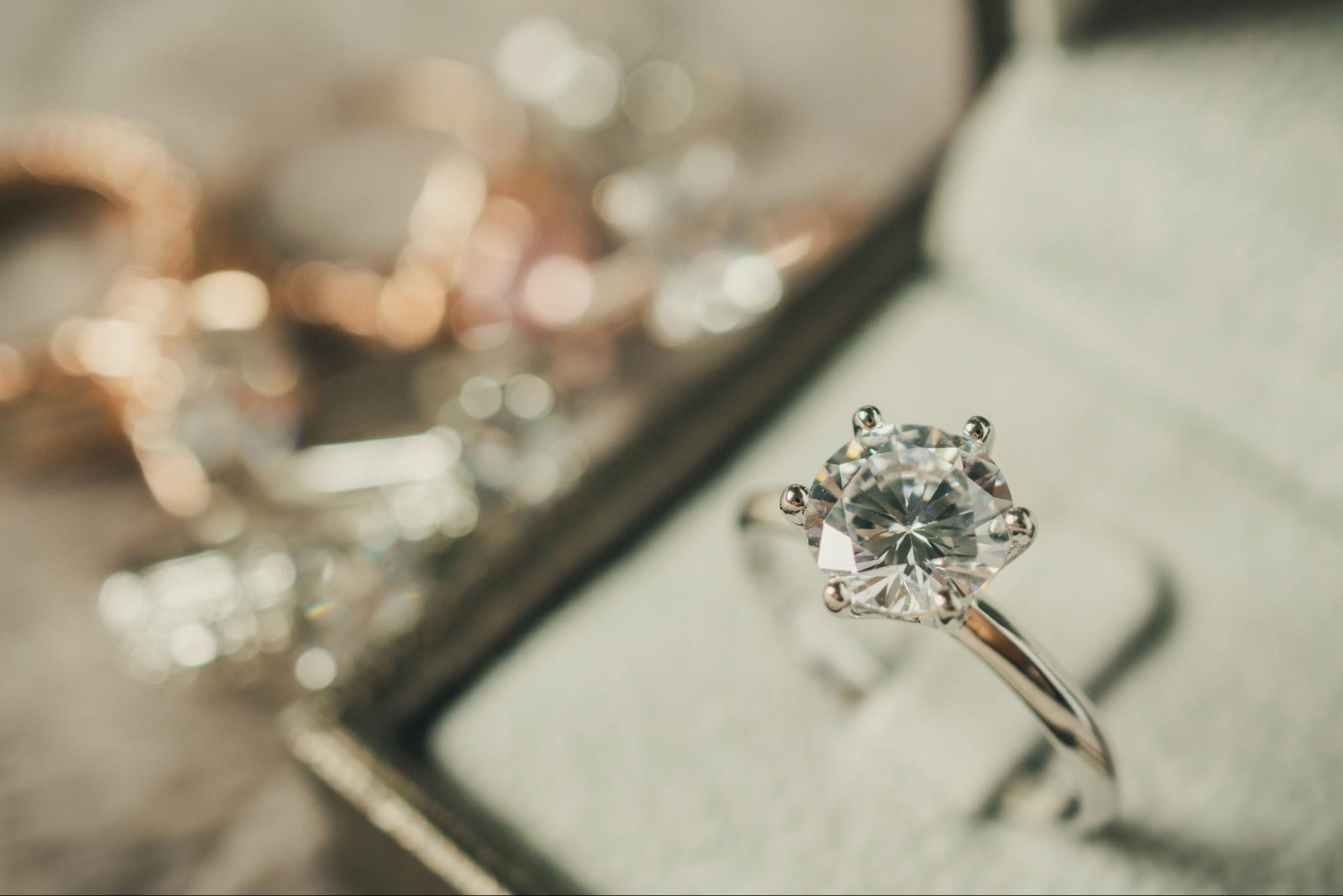
-
Place it face down
Diamonds are graded face down. When viewed face up, the sparkle of a diamond can disguise its true color. -
Compare it to master stones
Master stones are used to represent perfect examples of diamonds from each grading category–colorless, near colorless, faint, and so on. The grader will carefully compare the diamond next to a master diamond to determine which color grade it most accurately matches.
-
How Diamond Color Impacts Appearance
-
Metal Choice Matters
Diamond color is impacted by the color of the jewelry metal. While white gold and platinum can make already-white diamonds appear even more colorless, they can create contrast that amplifies the tint of warmer colored diamonds. Meanwhile, yellow gold or rose gold settings can camouflage the warmth of a visibly tinted diamond. -
Diamond Shape Matters
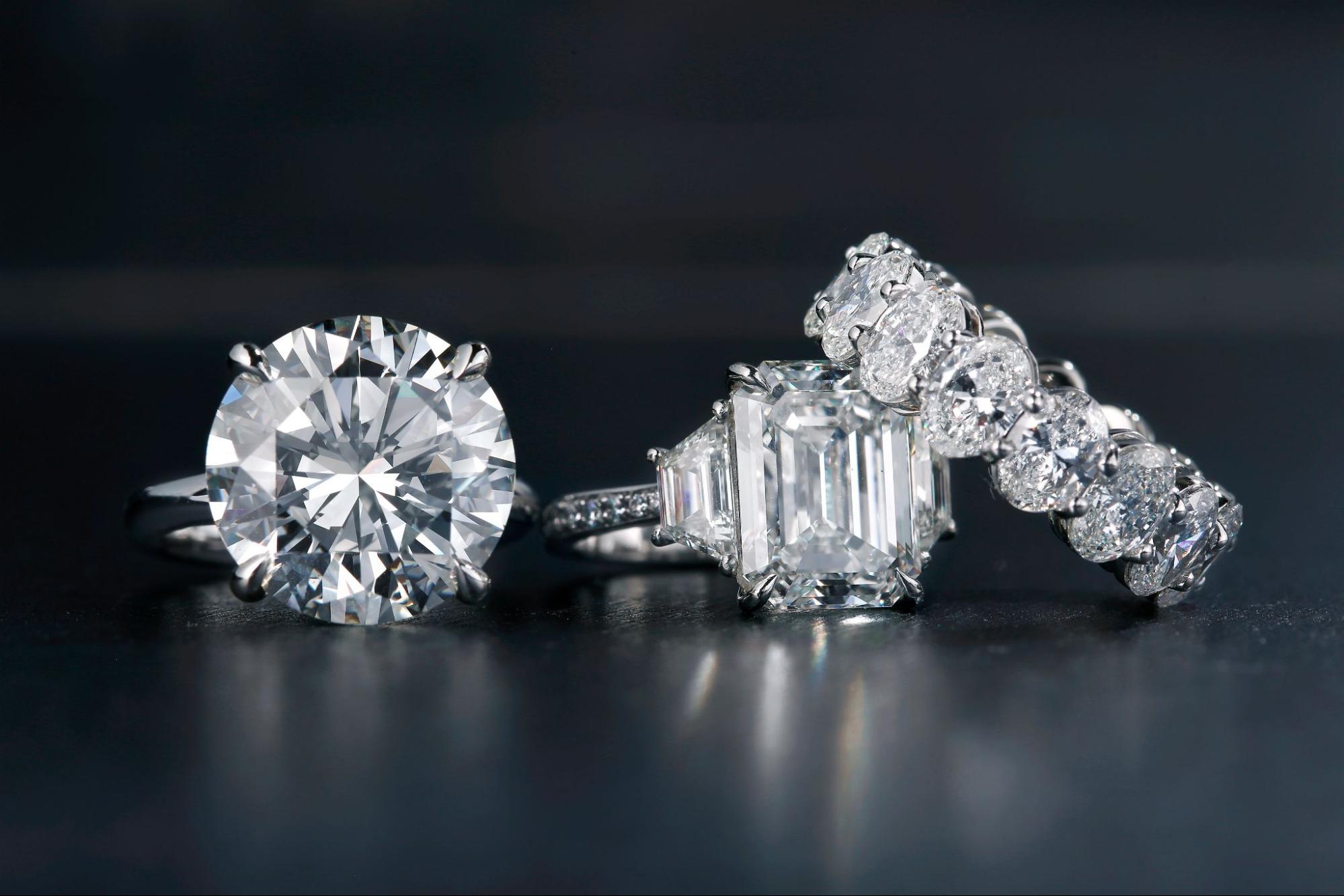
Step cut diamonds, like emerald and Asscher cuts, have large, wide, parallel facets. Because the facets are so open, they can show tints more clearly. Brilliant cut diamonds, with their many small facets, hide color much better. -
Cut Matters Most
Well-cut diamonds can successfully mask color. Well-cut diamonds reflect the maximum amount of light, creating enough sparkle and brilliance to disguise faint or even some light tints.
How Color Impacts Price
Higher color grades will fetch higher prices. The biggest price jumps typically occur right between the different ‘levels’ of the color grading scale (colorless, near colorless, faint, very light, and light). For instance, there are significant price jumps between:
- Grades D and E (highest possible grade to next-highest grade)
- Grades F and G (colorless to near-colorless)
- Grades J and K (near-colorless to faintly colored)
There is a tradeoff between cut, color and carat size. For instance, a 1 carat diamond
with a G color grade may cost more than a 1.20 carat diamond with a J color grade. A 1
carat diamond with a G color grade may cost more than a 1 carat diamond with an H
color grade–but if the H colored diamond is better cut than the G colored diamond, it
might still look just as colorless.
When It Makes Sense to Sacrifice Color
There are a few instances where buying a diamond with a lower color grade actually makes perfect sense.
-
To Afford Higher Cut Quality
Cut impacts a diamond’s sparkle more than color does. A well-cut diamond with an H color grade will look better than a poorly cut diamond with a D color grade. A quality cut can also disguise diamond tint, and even make a diamond appear larger than it actually is. So in many instances, it’s wise to prioritize cut grade, opting for an excellent or ideal cut, rather than color. -
To Get A Bigger Carat Weight
While you might not want to go all the way down to an S or T color grade just to afford a larger diamond, most people cannot tell the difference between, for instance, an F and a G grade diamond–especially with the naked eye. And if switching from an F to a G grade diamond means you can afford an extra 0.25 carats, for many buyers, it’s worth the trade.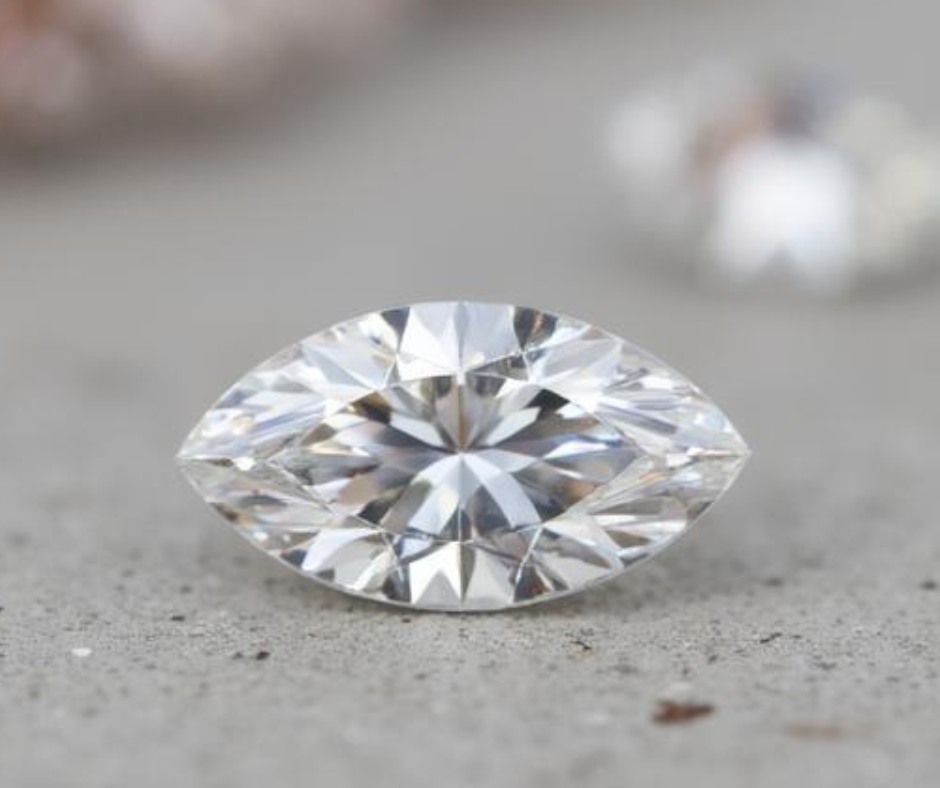
-
If You’re Choosing Yellow Gold
Warmer colored metals like yellow gold (or rose gold) can help mask the tint of a diamond. They give the entire ring a soft, warm glow, which many buyers find romantic. -
If You’re Choosing A Brilliant Cut
Brilliant cuts hide diamond tint quite well because they maximize sparkle, distracting from any flaws in the stone. You can get away with a lower color grade when purchasing brilliant cut diamonds like round, oval, or pear shapes.
When You Shouldn’t Sacrifice Color
A high color grade matters more in these scenarios.-
If You’re Buying A Large Diamond
Color is more noticeable in a larger diamond. With more surface area and more visual presence, larger diamonds reveal more of a diamond’s tint. -
If You’re Choosing A Step Cut
Step cut diamonds like emerald or Asscher shapes do not offer as much sparkle as brilliant cut diamonds. Instead, step cuts are often described as having a “glassy” look. The large facets of a step cut make it easier to notice any flaws within the diamond, including color. -
If You Want A Platinum Setting
Platinum settings are extraordinarily bright and white–even more so than white gold. They are so bright that they will highlight contrast between the whiteness of the metal and any warmth within the diamond itself, and emphasize any existing diamond tint.
Buying Tips
If you’re concerned about color, or if you’re buying a diamond that will naturally show
more color (like a large Asscher cut), then it is worth investing in a higher color grade.
Consider a diamond with:
- D-F color grade
- Ideal cut
- A solid clarity grade (diamonds that reveal more color also reveal more internal flaws/inclusions
If you’re interested in balancing color with other qualities like size and cut (this is
probably the case for most ring shoppers), consider a diamond with:
- G-H color
- Excellent or Ideal cut
- Eye-clean clarity
- Maximize carat weight
If the size of the diamond is the highest priority for you (also a common concern!),
consider a diamond with:
- I-J color
- Ideal cut
- Elongated diamond shape (oval, pear, marquise) for maximum visual impact
Find Your Dream Diamond At Ware Jewelers–Alabama’s Favorite Jeweler!
Diamond buying is all about balance. Unless you have an unlimited budget, you’ll almost certainly have to make some tradeoffs. For most buyers, cut will be a higher priority than color. But it’s okay if color is your number one priority, too. Smart compromises will land you a diamond with a bigger look, a stronger sparkle, and a better value.
We hope this article was helpful and gave you a better understanding of diamond color! As you can see, the diamond buying process–while fun and exciting–still requires plenty of thought and planning. In situations like this, it’s always a good idea to consult the experts. If you’re in the process of buying a diamond, we hope you’ll consider shopping with the Ware Jewelers team.
As Alabama’s favorite jewelry store–with locations in Auburn, Montgomery, Opelika, and Spanish Fort–we have decades of experience helping diamond shoppers find their dream rings. We’ll happily guide you through the buying process from start to finish, including helping you figure out your diamond-buying priorities and showing you all we have to offer. So, when it’s time to start looking, pay us a visit at one of our Alabama locations. We hope to see you soon!