
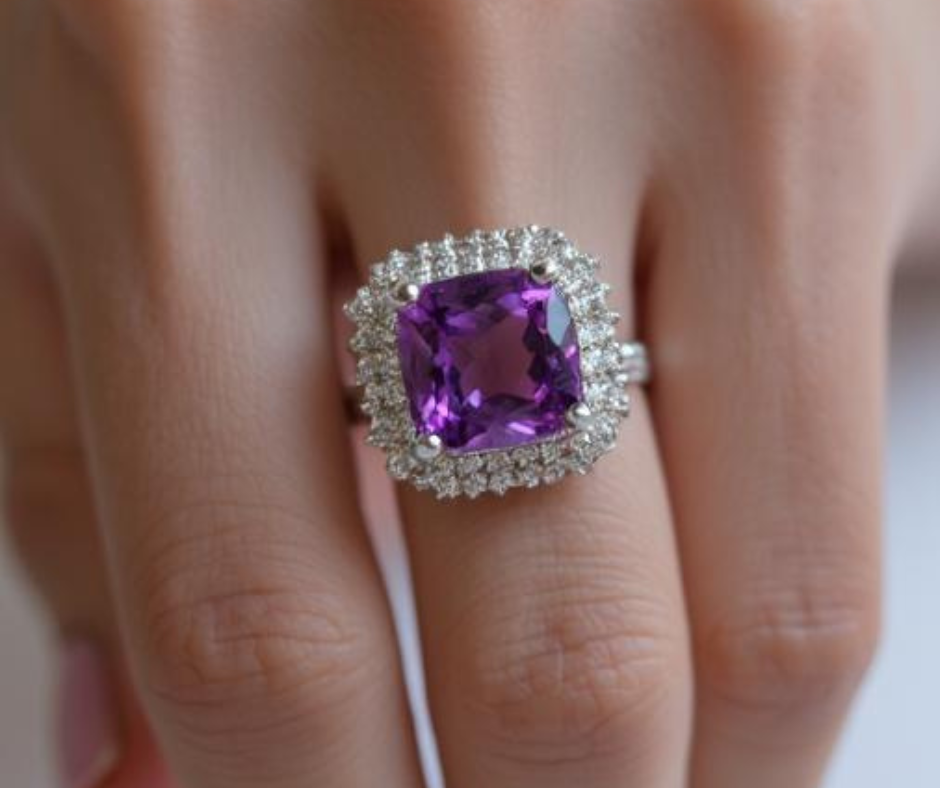
You may be searching for an amethyst jewelry gift, wondering about an amethyst engagement ring, or just curious to learn more about the February birthstone. No matter what brings you here, understanding more about amethyst’s color, clarity, value, and care needs will help you make an informed choice at the jewelry store. This guide breaks down everything you need to know about amethysts in a clear, approachable way.
-
What is Amethyst
-
The Symbolism of Amethyst
-
Amethyst Color: What to Look For
-
Amethyst Clarity: What’s Normal and What’s Not
-
Amethyst Cut: Turning a Stone Into a Gem
-
Amethyst Value: What Determines the Price?
-
Is Amethyst a Durable Gemstone?
-
How to Care for Amethyst Jewelry
-
Why Amethyst Remains a Favorite
What Is Amethyst?
Amethyst is a purple variety of quartz. Quartz is actually one of the most abundant minerals on earth–if you’ve been to a rocky beach, you’ve likely seen quartz! However, most quartz is clear or white. Amethyst gets its purple color from trace amounts of iron within the crystal structure of the quartz. Think of it like a natural dye.So while quartz is common, high-quality amethyst is much rarer. Amethyst has been treasured for thousands of years, and was once considered as valuable as diamonds. Recent discoveries of larger amethyst deposits have decreased the monetary value of amethyst, but hasn’t diminished its beauty. Today, amethyst is appreciated for its stunning color, durability, and symbolic meaning.
The Symbolism of Amethyst
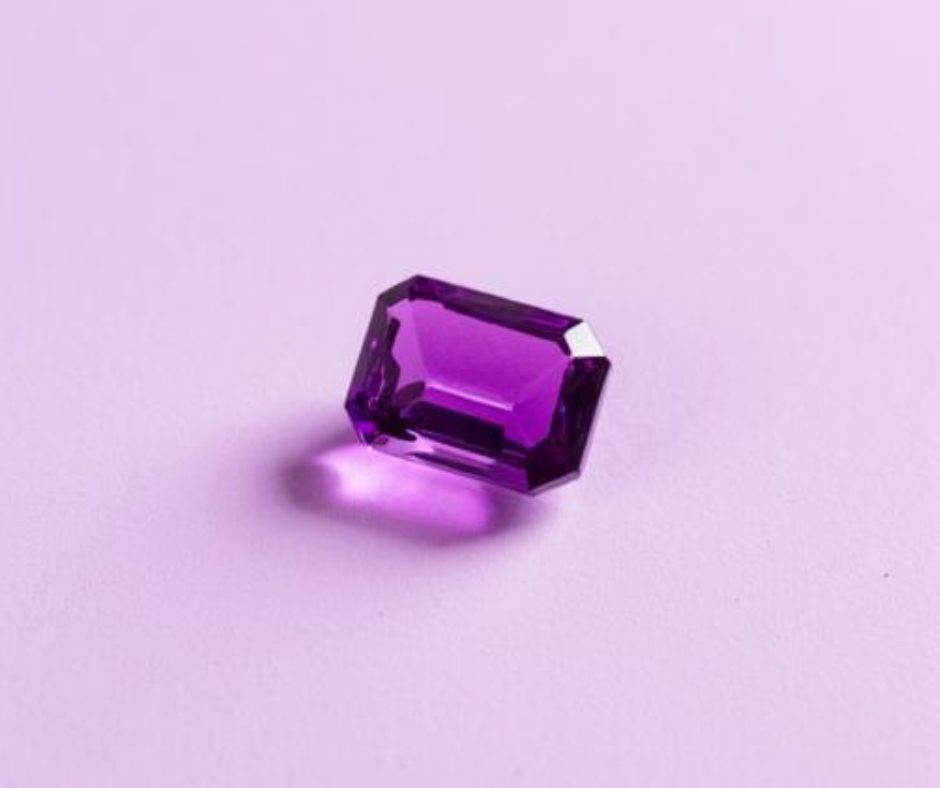
Amethyst is the birthstone of February. It has a rich history and symbolism stretching back thousands of years. The ancient Greeks believed that amethyst could ward off drunkenness, which is where the gem gets its name–amethystos, in Greek, means “not intoxicated.” Perhaps this is how amethyst gained its association with balance and moderation, which still persists today.Amethyst is said to symbolize:
- Calmness and inner peace
- Resilience in the face of stress
- Mental clarity
- Wisdom
- Personal strength and protection
Amethyst Color: What to Look For
Color is the most important factor in determining the value of an amethyst. The richer and deeper the hue, the higher the price tag.Shades of Amethyst
Amethyst comes in a wide spectrum of shades, from light lavender to intense violet. Some stones also boast flashes of red or blue that shine under different lighting conditions. These flickers of color are highly desirable.- Light lavender: They may not fetch the highest prices, but lighter purple shades have a soft, airy, and delicate look that many people admire.
- Medium purple: Most amethyst stones fall somewhere between lavender and royal purple. Within this range you’ll find many balanced, classic, and elegant shades.
- Deep purple: Velvety, royal shades of purple are rich, bold, and especially valuable.
Evenness of Color
High-quality amethyst should have an even color distribution throughout the stone. In other words, every part of the stone should look just as vivid and saturated. Stones with visible zoning (where color appears in patches or bands) are generally less valuable and less desirable. However, some people enjoy the unique look that zoning creates.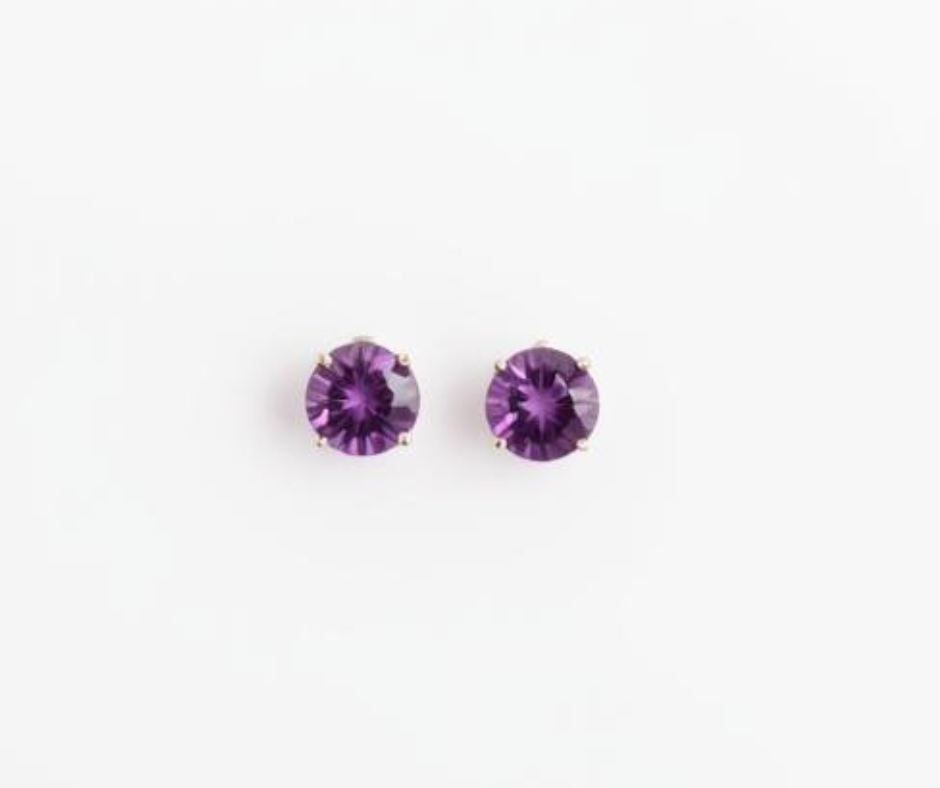
Amethyst Clarity: What’s Normal and What’s Not
Clarity refers to the absence or presence of inclusions inside the gemstone. Inclusions are any flaws that appear within the crystal structure of the gemstone, including gas bubbles, feathering, or dark spots made from other entrapped minerals.Is Amethyst Usually Clear?
Yes, amethyst is typically eye-clean, meaning you should not be able to see any inclusions with the naked eye. This is one reason amethysts are so popular in jewelry. Tiny inclusions can occur naturally, but in a quality amethyst, they shouldn’t be large enough to impact the stone's brilliance or durability.What to Avoid
When purchasing an amethyst, avoid stones with the following problems:- Visible cracks
- Cloudiness that dulls the stone’s brilliance
- Large, visible inclusions–inclusions of this size may weaken the structure of the gem
A well-cut, clear amethyst will reflect the light beautifully and show off its vibrant color to full effect.
Amethyst Cut: Turning a Stone Into a Gem
Color and clarity are key to understanding the beauty of an amethyst. But just as with diamonds, cut plays the greatest role in determining how an amethyst looks.Amethyst is available in a wide variety of shapes, including:
- Oval
- Round
- Cushion
- Emerald
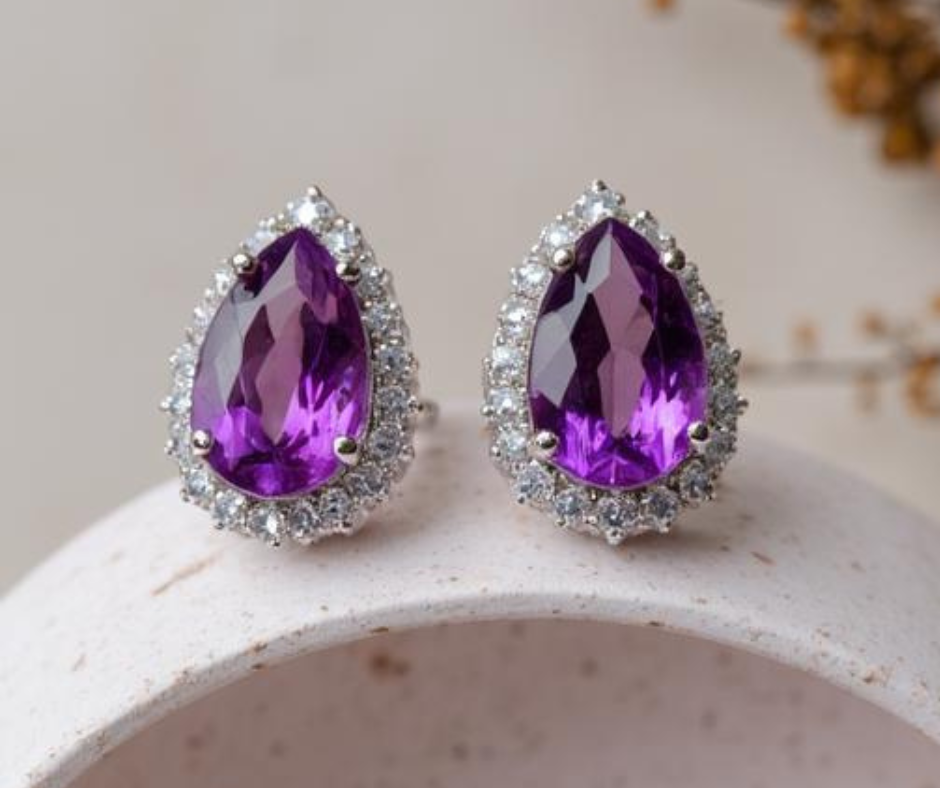
- Pear
- Trillion
If you know anything about diamonds, then most of these shapes will sound familiar to you. The only one you might not know is trillion, which is a three-pointed shape–sort of like a rounded triangle.
Regardless of the shape, amethyst cut involves the proportions and faceting of the stone. This includes the height and depth of the stone, as well as the faceting style. Brilliant cut amethysts have dozens of facets to reflect light, giving these stones maximum brilliance. Step cut amethysts have long, open facets that give the stones an elegant, glassy look.
A good cut enhances color and clarity, maximizes sparkle, and minimizes any uneven color zoning. Skilled cutting transforms a nice stone into an excellent one.
Amethyst Value: What Determines the Price?
Amethyst is considered a semi-precious gemstone, so it doesn’t come with the same high price tag as a diamond or a sapphire. In fact, amethyst is one of the most affordable gemstones on the market. However, that doesn’t mean it’s always inexpensive. Higher quality amethysts will cost more money.Factors that Impact Amethyst’s Value
- Color: A deeper, richer purple hue generally means higher value.
- Clarity: Eye-clean stones are more desirable.
- Cut: Well-proportioned stones are more brilliant, more beautiful, and more valuable.
- Carat Weight: Larger stones cost more, but cost per carat weight does not increase as steeply as it does with diamonds.
- Origin: Some points of origin are more sought-after, as they have a reputation for producing higher quality amethysts.
Because amethyst is available in larger sizes, it’s possible to choose a bold, eye-catching gemstone without the high price tag of many other colored gems.
Is Amethyst a Durable Gemstone?
Yes, amethyst is relatively durable. It ranks 7 on the Mohs hardness scale. The Mohs scale ranks the durability of minerals, with 10 being the highest rank. Diamonds rank 10, and most other colored gems range from 7-9 on the scale. 7 is considered a high enough rank to safely wear in most types of jewelry.We don’t recommend wearing amethyst jewelry all day, every day. It’s not as strong as diamonds, so it shouldn’t stay on your finger all day the way your engagement ring does. However, you can safely wear amethyst in necklaces and earrings. And if you take care not to bump your hands, then you can safely wear amethyst in rings and bracelets, too.
While amethyst is fairly strong, it can still chip or scratch if knocked against harder surfaces, so thoughtful wear is important. It’s also crucial to properly care for your amethyst jewelry while you aren’t wearing it.
How to Care for Amethyst Jewelry
With proper care, your amethyst jewelry can last a lifetime.Cleaning Amethyst Safely
The best way to clean amethyst jewelry is with a simple, gentle wash.- Warm water
- Mild dish soap
- A soft brush or cloth
If you are ever uncertain about how to clean a piece of jewelry, bring it to a professional jeweler.
Protecting the Color
Prolonged exposure to direct sunlight or high heat can cause amethyst to fade over time. We recommend removing your amethyst jewelry before tanning, swimming, using hot tubs, or spending long periods of time outside. Also, be sure to store your amethyst jewelry away from windows or heat sources.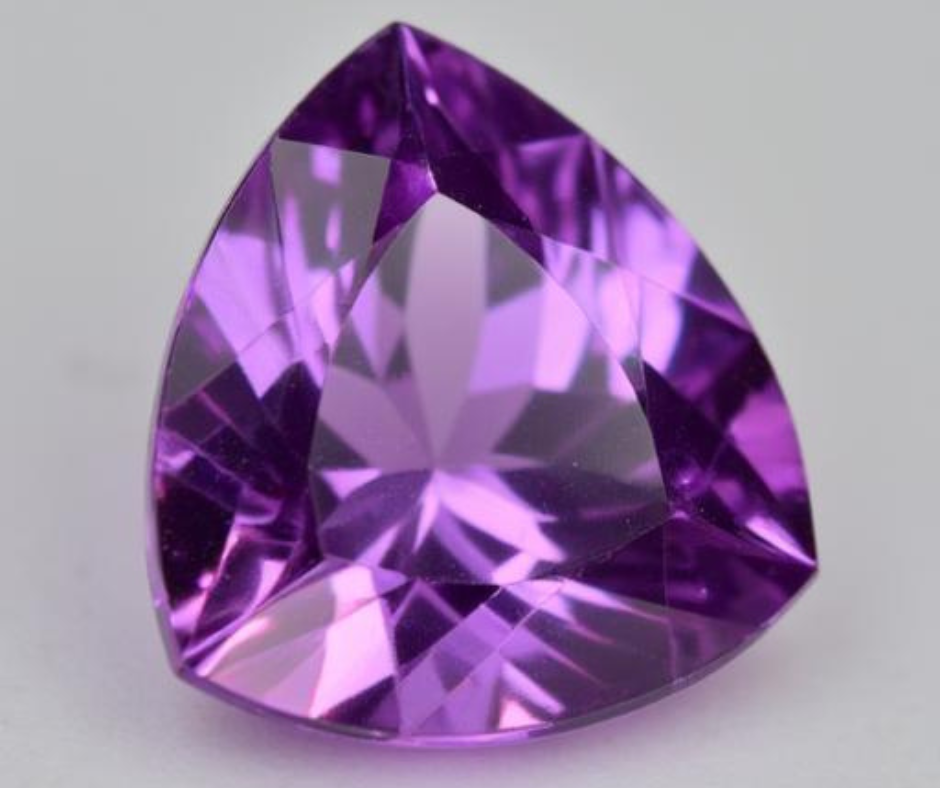
How to Store Amethyst Jewelry
Store amethyst jewelry separately from other pieces or in a soft pouch to prevent scratching. Remember, gems can be scratched by other gems with a higher ranking on the Mohs scale. So, amethysts can easily be scratched by sapphires, rubies, and diamonds. A jewelry box with individual compartments is a smart investment–not just for your amethyst pieces, but for all your jewelry.Why Amethyst Remains a Favorite
Amethyst continues to be one of the most popular gemstones, and for good reason. Its wide range of breathtaking purple hues, high clarity, accessible cost and meaningful symbolism make it a beautiful choice for February birthdays and beyond.No matter why you’re drawn to amethyst, our team is always happy to guide you in selecting a piece. Here at Ware Jewelers, we know that finding the right gemstone is about more than a beautiful look–it’s about how it feels when you wear it. Come visit one of our Alabama locations–we have stores in Opelika, Auburn, Montgomery, and Spanish Fort–to find the amethyst that catches your eye and captures your heart!