
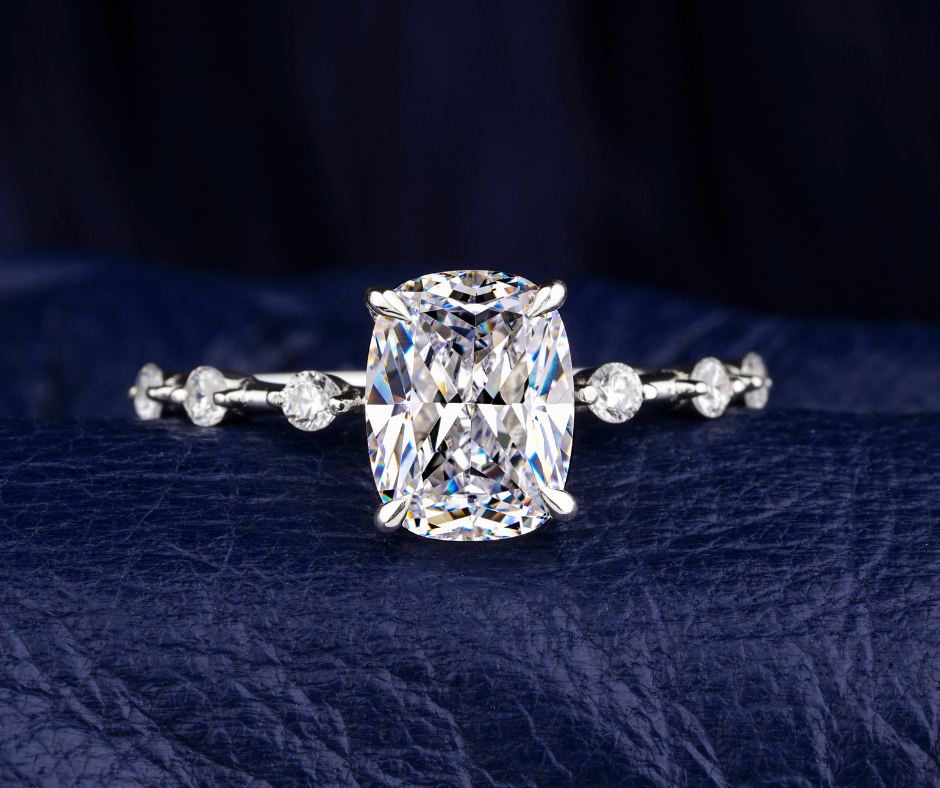
But breathtaking diamonds aren’t out of your reach. There are many ways to get the eye-catching diamond of your dreams without the eye-popping price tag. In this blog, we’ll explain what carat size means and share smart, design-savvy ways to make a smaller diamond appear larger. With these tips and tricks, you’ll be able to maximize your diamond and minimize your spending.
1. What is Diamond Carat?
Carat is one of the “4 Cs,” the standards by which jewelers and gemologists judge the quality (and price) of a diamond. The other 3 Cs are cut, color, and clarity.Carat is a measure of weight, not size. One carat is equivalent to 200 milligrams. 200 milligrams is an extremely light weight. For perspective, consider that a standard paperclip or pen cap weighs about one gram. That means that one carat only weighs as much as 1/5th of a paperclip or pen cap.
That’s all pretty interesting on its own, but here’s the truly fascinating part: Two diamonds of the exact same carat weight can appear completely different in size. This is because a diamond’s shape, cut, and dimensions can drastically change its appearance. A poorly cut 1 carat diamond can look smaller than a well cut 0.8 carat diamond, for example.
2. Are Bigger Diamonds Better?
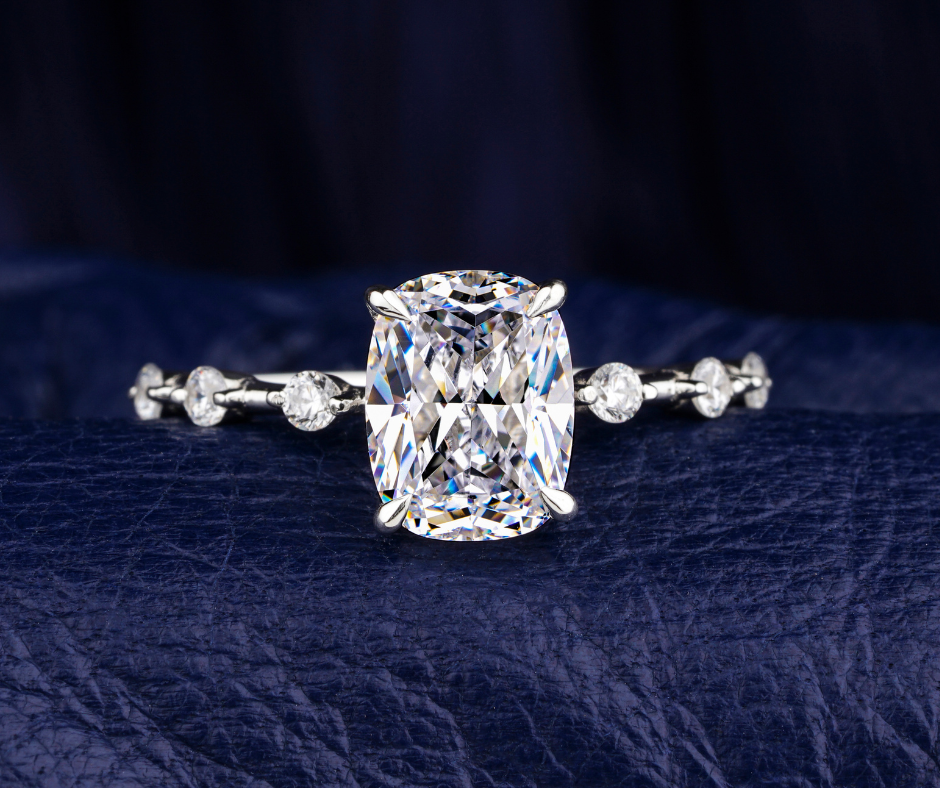
Much of a diamond’s beauty comes from its sparkle rather than its size. A diamond’s sparkle (also called brilliance) contributes greatly to its perceived size. The scattering of light has a visual effect, making it appear that the diamond takes up more space than it actually does.So what makes a diamond sparkle? The most important factor is cut. Cut is a technical term that refers to the proportions and facets of a diamond. Proportions are the length, width, depth, and angles of a diamond. Facets are the small, flat, planes cut into the diamond in geometric patterns. A good cut massively improves the diamond’s sparkle, and as a result, makes the diamond look larger. Clarity also has a big impact on a diamond’s brilliance. Blemishes and imperfections impact how light travels through a diamond and can dull its sparkle. Clearer diamonds are more sparkly and thus, more expensive.
All of this is to say that sacrificing clarity or cut for a larger stone may mean ending up with a duller diamond. It may sound counterintuitive, but a smaller diamond with a better cut often appears bigger than a diamond of a higher carat weight.
But beyond selecting for cut and clarity, there are more ways to make your diamond look larger. Here are just a few.
3. 7 Tricks to Make a Diamond Look Bigger
- Choose a Halo Setting
Halo settings are a great and relatively inexpensive way to increase the perceived size of your diamond. Halo settings encircle the center diamond with a tightly-set ring of smaller diamonds. This creates the illusion of a bigger center diamond, especially from afar. Halo settings sparkle from all angles, and while they’re more popular in modern designs, you can also find them on vintage rings. - Opt for a Thin Band
The proportions of your ring band can also make your diamond look larger. Slim or tapered bands make the diamond look bigger by comparison. Chunky or ornate bands can overwhelm the diamond, making it appear smaller. - Consider Elongated Shapes
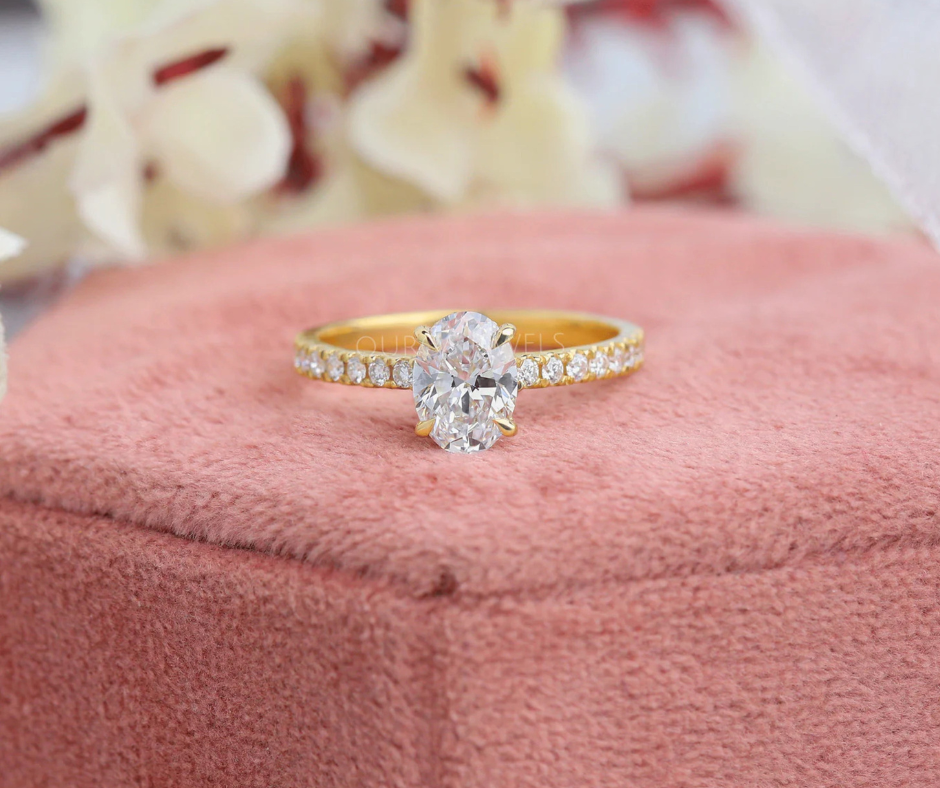
Diamonds with a larger surface area will look larger overall. Elongated diamond shapes, including oval, marquise, pear, and emerald, cover more surface area, resulting in a bigger look on the finger. As an added bonus, they typically cost less per carat than round diamonds. - Use a Bezel Setting
Bezel settings encircle the diamond, protecting and accentuating it on all sides. The metal rim amplifies the illusion of a bigger stone. These settings are more common in vintage rings, particularly in Art Deco era designs, though they’ve become more popular in recent years. They’re also one of the most secure settings available, making them a great choice for multiple reasons. - Keep Your Ring Clean
Perhaps the easiest tip on this list, keeping your ring clean is a great way to keep it sparkling. Dirt and oils that accumulate on the surface of the stone will dull its brilliance over time. A simple home cleaning with dish soap and lukewarm water (or a jewelry cleaner) can work wonders on your diamond. - Choose a White Metal
White metals, such as platinum or white gold, reflect more light. More light means more brilliance, and more brilliance means (the illusion of) a larger diamond. This is especially true for colorless or near-colorless diamonds. That’s yet another reason to look at diamond quality before diamond size! - Play with Pavé
Pavé bands are a unique style of wedding band, studded with many small, closely-set diamonds that cast a wide and glittering field of sparkle, visually enlarging the ring. It’s sort of like a diamond halo, but along the entire wedding band. For maximum sparkle, you can combine a halo setting with a pave band.
4. Smart Buying Tips for Budget-Conscious Shoppers
Here are a few extra tips for how to buy an incredible diamond at an incredible price.- Buy just under a milestone carat weight. Diamond prices increase exponentially at certain weights, including 1 ct and 2 ct. So purchasing a diamond at, say, 0.95 ct can save you lots of money while barely compromising on size.
- Go for eye-clean over flawless. When it comes to clarity, diamonds are graded down to a microscopic level. Many imperfections that hurt a diamond’s clarity score are totally invisible to the naked eye. They won’t start interfering with a diamond’s brilliance until they become large enough to see without a microscope. So, as long as the imperfections aren’t visible, it’s okay if a diamond isn’t flawless.
- Consider lab-grown diamonds. While many people opt for natural diamonds due to their exclusivity, symbolism and romantic connotations, lab-grown diamonds are less expensive. If stone size is a dealbreaker for you or your future bride, but you’re working with a limited budget, then lab-grown may be your best bet.
- Work with a reputable jeweler. Trustworthy, well-established jewelers with an educated staff can help you find the best value based on your preferences. Jewelers like the Ware team are invested in and passionate about diamonds, and we know our stones inside and out.

Ware Jewelers Has Your Dream Diamond at Any Budget
We hope these tips and tricks showed you that there are many ways to increase the perceived (or actual) size of your diamond without going over budget. Now, we hope you’ll trust us to help you as you take the next step in your diamond buying journey!For a purchase as major and meaningful as a diamond, why should you settle for anything less than the best? Even if your budget’s tight, we know there’s a diamond out there for you. We’ve worked at all sorts of price points to help countless people find the diamonds of their dreams.