
The Complete Diamond Buying Guide: How to Choose the Perfect Diamond in Alabama
Buying a diamond is a big decision. It’s not just a major financial decision, it’s also an expression of your love and commitment. It’s normal to be overwhelmed as you start shopping for a diamond, but you don’t have to feel that way!
Understanding the basics of diamond shopping–the quality and value of a diamond, diamond shapes and ring styles, and budgeting, to name a few–can empower you with the information you need to make the right decision. At Ware Jewelers, we want all of our buyers to feel knowledgeable and confident as they start their diamond buying journey. That’s why we created this in-depth guide to diamond shopping.
Table of Contents
- Understanding the 4 Cs of Diamond Quality
- Diamond Shapes: Choosing Your Style
- Natural vs. Lab Grown Diamonds
- How Much Should You Spend on a Diamond
- Diamond Certifications and Grading Reports
- Choosing the Right Diamond for an Engagement Ring
- Diamond Jewelry Beyond Engagement Rings
- Common Diamond Buying Mistakes to Avoid
- Why Buy a Diamond from a Local Alabama Jeweler?
- Frequently Asked Questions About Buying Diamonds
- Find Your Perfect Diamond at Our Alabama Jewelry Stores
Understanding the 4 Cs of Diamond Quality
Many years ago, diamond grading labs like the Gemological Institute of America (GIA) developed a standardized system for grading the quality of a diamond. They chose four categories for diamond grading–color, cut, clarity, and carat–which are now called the 4 Cs. It’s important to know about the 4 Cs so you can determine the quality of a diamond.
Diamond Cut: The Most Important Factor
Diamond cut refers to how a diamond is cut from the rough into a jewelry-quality gem. Diamond cut determines how well a diamond sparkles, making it an extremely important factor in the quality of the diamond.
More specifically, it refers to the faceting and proportions of a diamond. Facets are the tiny planes cut into the diamond that refract the light and give the diamond its sparkle. Proportions are the depth, width, and table size of the diamond (the table is the flat surface at the top of the diamond).
Diamond cut determines how well a diamond interacts with light. A diamond needs to absorb light, bounce the light around its facets, and return the light as sparkle. A poorly cut diamond will leak light, resulting in poor refraction and duller sparkle.
The GIA standardized cut grades are: Excellent, Very Good, Good, Fair, and Poor.
What Is the Best Diamond Cut Grade?
The best diamond cut grade on the GIA scale is Excellent. The GIA evaluates diamonds for brightness, fire, scintillation, weight ratio, durability, polish, and symmetry to decide on a cut grade.
Is an Excellent Cut Diamond Worth the Extra Cost?
Yes, an Excellent cut diamond is worth the extra cost because it provides the best sparkle of any cut. This makes the diamond brighter and more brilliant, and can even make the diamond appear larger than it actually is.
Diamond Color Explained
The GIA diamond color grading scale is an alphabetical scale that goes from D-Z, with D being completely colorless and Z being lightly colored. Here is the full GIA color grading scale:
D-F: Colorless. These diamonds appear completely white.
G-J: Near colorless. These diamonds often look colorless to the naked eye.
K-M: Faint. These diamonds may show very faint color to the naked eye.
N-R: Very light. These diamonds might show slightly more obvious color to the naked eye.
S-Z: Light. These diamonds usually show color to the naked eye.
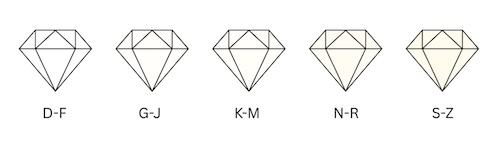
Keep in mind, the GIA only grades standard white diamonds. Diamonds beyond a Z grade are called “fancy colored diamonds,” and they are valued for their appealing yellow or brown color.
You don’t have to buy a D-F graded diamond to get a colorless stone. Remember, these diamonds are graded in labs, using high-powered microscopes and specialized equipment. You’ll only be looking at these diamonds with your naked eye, and most diamonds in the G-J range appear totally colorless to the naked eye. Value-conscious buyers can easily save money without sacrificing quality by buying a diamond in the G-J color range. In fact, most of the diamonds sold to engagement ring shoppers fall somewhere in the G-I range.
Can You See the Difference Between F and G Color Diamonds?
Realistically, no, you cannot see the difference between a diamond graded F (colorless) and a diamond graded G (near colorless). To the naked eye, colorless and near colorless diamonds will appear the same unless viewed under a microscope.
Diamond Clarity Explained
Diamond clarity refers to the presence or absence of flaws within a diamond. Diamond flaws come in two categories: blemishes (which are on the outside of the diamond) and inclusions (which are on the inside of the diamond).
Common blemishes include scratches, nicks, and polish lines. Most blemishes are the result of mistakes made during cutting and polishing. Common inclusions include pinpoint specks, clouds, and crystals. Most diamond inclusions are the result of other minerals or air bubbles getting trapped within the diamond as it grows.
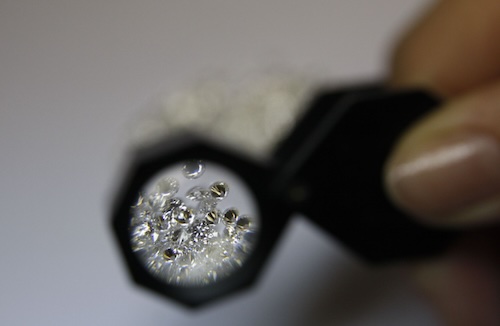
Diamond graders look at diamonds through high-powered microscopes to grade their clarity. It’s easy to see flaws in a diamond when the stones are magnified to 10x their size. But most jewelry-quality diamonds are eye-clean, meaning that you cannot see the flaws with your naked eye.
Here is the GIA clarity grading scale:
FL: Flawless. These diamonds have no blemishes or inclusions visible under 10x magnification. They are extraordinarily rare.
IF: Internally flawless. These diamonds may have tiny blemishes, but they have no inclusions visible under 10x magnification.
VVS: Very, very slightly included. These diamonds have miniscule inclusions visible under 10x magnification.
VS: Very slightly included. These diamonds have small inclusions visible under 10x magnification.
SI: Slightly included. These diamonds show noticeable inclusions under 10x magnification.
I: Included. These diamonds have obvious inclusions under 10x magnification. Their inclusions may also be visible to the naked eye.
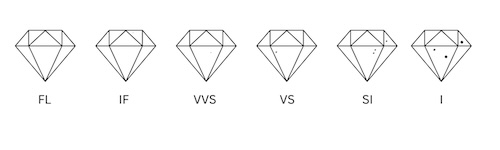
Don’t feel like you have to hunt down a flawless diamond. Diamonds in the VS-VVS range will appear just as clear to the naked eye, and can save you a lot of money.
What Clarity Grade Offers the Best Value?
VS (very slightly included) diamonds offer the best value for shoppers, balancing affordable prices with eye-clean quality. Most engagement rings sold in the United States fall within the VS-VVS range.
Diamond Carat Weight
This is the factor that most people focus on when buying a diamond. But carat weight isn’t everything. It’s important to balance size and quality, and it’s important to learn about what “carat” really means. Let’s get into it!
A carat is equivalent to 200 milligrams, or 0.2 grams. That is about 1/5th the weight of a standard pen cap. When you think about how small that really is, the sparkle and beauty of a diamond become all the more impressive!
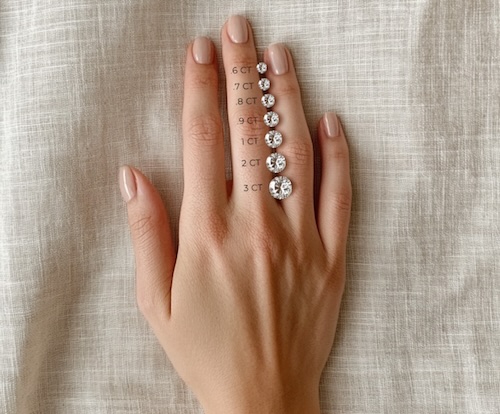
Of course, most diamond shoppers hope to buy the largest carat size they can. But the cost of a diamond increases exponentially with carat size. That means the price grows rapidly at each additional carat, instead of increasing at a consistent rate. For instance, while the average price of a 1-carat natural diamond is $3,000-8,000, the average price of a 2-carat diamond is $15,000-20,000.
If a larger carat size is out of your budget, there are other ways to make your diamond look bigger. The most effective one is to purchase a well cut diamond. As we explained in the Diamond Cut section above, cut determines how a diamond sparkles. Brilliant diamonds look bigger than their actual weight because of how well they disperse their sparkle. It’s a neat visual effect, and a great way to increase the perceived size of the diamond.
Some diamond shapes also increase the perceived size of the diamond. Elongated diamond shapes like oval diamonds have a larger surface area than round diamonds, increasing the visual weight of the stone.
How Big is a 1-Carat Diamond?
A 1-carat diamond is 200 milligrams, or 0.2 grams. Visually, a 1-carat round diamond is about the size of a pencil eraser.
Is a Bigger Diamond Always Better?
No, a bigger diamond is not always better, especially if you have to sacrifice quality to afford a larger carat weight. Cut quality determines a diamond’s sparkle, and a great cut can even make a diamond look bigger than it actually is.
Diamond Shapes: Choosing Your Style
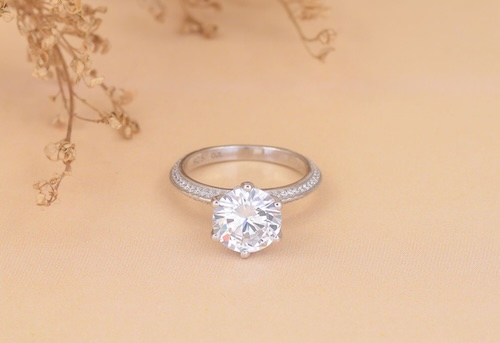
Round Brilliant Cut Diamonds
Round brilliant cut diamonds are the most popular engagement ring diamonds, and have been for many years. These are the “classic” diamonds, perfect for those who want a traditional, timeless look. They are the most expensive diamond cut.
By definition, all of these diamonds are brilliant cuts, meaning that they have 58 facets. The high number of facets ensures that these diamonds sparkle radiantly. If you are looking for a diamond with a stunning cut and an enduring beauty, round brilliant diamonds may be for you.
Princess Cut Diamonds
Princess diamonds are also brilliant cuts, but they’re square instead of round. The princess shape has a modern, geometric look beloved by brides who want a diamond that blends classic appeal, breathtaking sparkle, and bold angles.
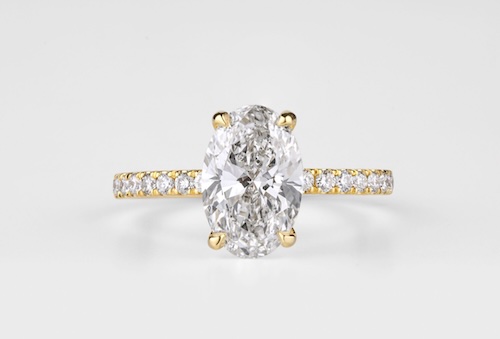
Oval Cut Diamonds
Oval diamonds are an elongated shape. They have a larger surface area that increases their perceived size, especially if the diamonds are of an Excellent or Very Good cut quality.
Oval diamonds are brilliant cut diamonds with great light return and high brilliance. However, they exhibit the “bowtie effect.” This is a bowtie-shaped area of shadow in the center of the diamond. All elongated diamonds exhibit the bowtie effect due to the difficulty of faceting an elongated stone. However, some diamonds show a stronger bow tie effect than others. The bowtie effect may not even be noticeable in high quality oval diamonds.
Cushion Cut Diamonds
Cushion cuts are square shaped, but with softly rounded corners that resemble a pillow–hence the name! Cushion shapes can also be elongated to look more rectangular. Elongated cushion cuts share the characteristics of other elongated diamonds, while traditional cushion cuts bear a closer resemblance to princess cut diamonds.
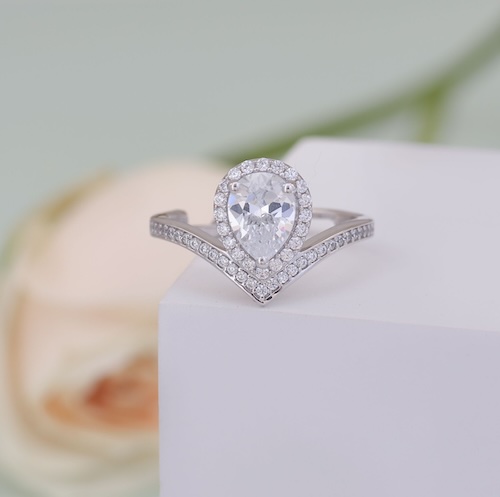
Pear Cut Diamonds
Pear cut diamonds are sometimes called teardrop diamonds, since they are rounded on the bottom and taper up to a pointed top. These brilliant cut diamonds offer stunning sparkle and a flattering silhouette that makes the diamond look larger and the wearer’s finger look longer.
Radiant Cut Diamonds
Radiant cut diamonds have a rectangular shape similar to emerald cut diamonds, but they’re brilliant cuts rather than step cuts. They combine the bold, geometric silhouette of the emerald shape with the stunning sparkle of a 58-facet brilliant cut.
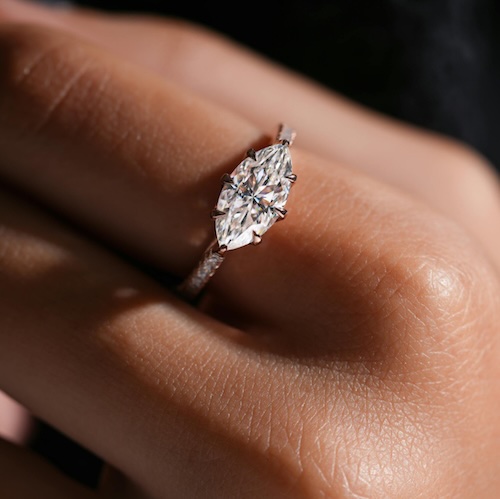
Marquise Cut Diamonds
Marquise diamonds are elongated shapes with rounded edges and pointed ends. They are one of the oldest diamond shapes of all time, with a long and romantic history. These brilliant cut diamonds flatter the wearer’s hand, making the fingers appear longer and more slender.
Emerald Cut Diamonds
Emerald cut diamonds are rectangular diamonds with slightly angled corners. They have long, parallel facets called step cuts that give them a glassy, elegant look. They don’t sparkle as much as brilliant cut diamonds, but many people love them for their sleek, vintage-inspired look.
Diamond Shape Comparison Table: A Quick Guide
| Diamond Shape | Appearance | Cut Type | Sparkle Level | Popularity |
|---|---|---|---|---|
| Round | Round | Brilliant | Highest | Most popular |
| Princess | Square | Brilliant | Very High | 2nd most popular |
| Oval | Oval | Brilliant | High | Most popular elongated shape |
| Cushion | Square with gently rounded sides | Brilliant | High | Increasingly popular |
| Emerald | Rectangular with angled corners | Step | Lower | Increasingly popular |
| Pear | Rounded bottom that tapers to a pointed top | Brilliant | High | Increasingly popular |
| Radiant | Rectangular | Brilliant | High | Increasingly popular |
| Marquise | Rounded sides and pointed ends | Brilliant | High | Increasingly popular |
Natural vs. Lab-Grown Diamonds
What Is a Natural Diamond?
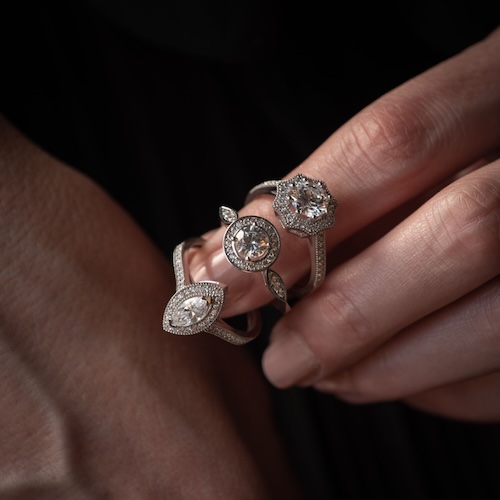
Natural diamonds are mined from the earth. They grow far beneath the surface of the earth when carbon is subjected to extreme heat and high pressure. Natural diamonds form over the course of millions of years and are an extraordinarily rare, finite resource. Because of their rarity, natural diamonds are strongly associated with romance and commitment.
What Is a Lab-Grown Diamond?
Lab-grown diamonds are grown in a laboratory, in small, airtight chambers that replicate the high heat and high pressure environments where natural diamonds grow beneath the earth. They are an infinite resource, because scientists can continually create them. Because of this, some people feel that lab-grown diamonds do not share the same symbolic weight as natural diamonds.
Key Differences Between Natural and Lab-Grown Diamonds: A Quick Guide
| Diamond Type | Origins | Cost | Appearance | Durability | Long-Term Value |
|---|---|---|---|---|---|
| Lab-Grown | Laboratory | Less expensive | Identical | Identical | Depreciates |
| Natural | Mines | More expensive | Identical | Identical | Grows |
Are Lab-Grown Diamonds Real Diamonds?
Yes, lab-grown diamonds are visually and chemically identical to natural diamonds. They share the same qualities as natural diamonds, including high durability and high sparkle.
Which Option Is Right for Me?
It depends on your own needs and priorities. Before deciding between a natural or lab-grown diamond, consider your budget, your future plans with the diamond, and how much the symbolism of a natural diamond means to you.
How Much Should You Spend on a Diamond?
Setting a Realistic Budget
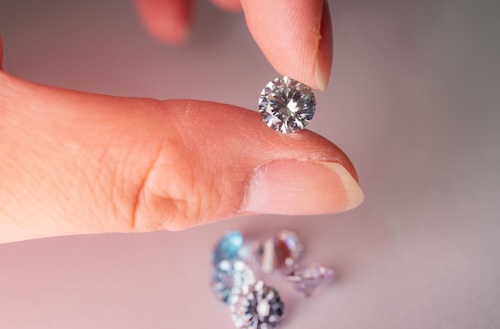
Before you purchase a diamond, take time to consider your budget. Have an idea of what you hope to spend before you start shopping, whether it’s an exact price point or just a general range.
When setting your budget, take you and your partner’s finances into consideration. Proposing means preparing for marriage, and in marriage, one partner’s financial decisions impact both members of the couple. Of course you want to get your partner the best ring possible, but don’t break the bank to do so.
The good news is, a local jeweler can help you find your dream ring while staying on-budget. Schedule an engagement ring consultation to discuss budget concerns. You and your jeweler can discuss your options, which might include payment plans or making small adjustments to your ideal ring.
How to Maximize Value
To cut down on expenses, consider these options:
- Purchasing a lab-grow diamond instead of a natural diamond.
- Investing in a higher-quality cut rather than a higher carat weight.
- Choose eye-clean diamonds rather than spending more money on diamonds with higher clarity or color grades.
- Choosing an elongated diamond cut that increases the perceived size of the diamond.
Diamond Certifications and Grading Reports
When you purchase a diamond from a trusted local jeweler, you will receive a certification that shows your diamond’s grading report. Diamond certifications may also be called grading reports. Here’s why diamond certification matters.
Why Certification Matters
Diamond certification matters because it provides an independent verification of your diamond’s quality and authenticity. It shows you that you are paying a fair price for the diamond based on its characteristics and quality, protecting you from overpaying. A diamond certification will also be invaluable if you ever want to insure, appraise, or resell your diamond.
Diamond Grading Laboratories
The top diamond grading laboratories in the United States are the GIA (Gemological Institute of America) and the AGS (American Gem Society). Both of these labs are trustworthy and professional, with long histories and high standards.
How to Read a Diamond Certificate
Diamond certifications (a.k.a grading reports) typically include the following information:
- A report or certificate number
- A date of issue
- The shape and cut of your diamond
- The measurements of your diamond
- The carat weight, color grade, clarity grade, and cut grade of your diamond
- Information on the diamond’s polish and symmetry
- A diagram of your diamond’s proportions
- A plot showing your diamond’s clarity, with inclusions and blemishes marked
- A report on your diamond’s fluorescence, if any
For the average person, the most important things to look for are:
- Cut. Aim for Excellent or Very Good.
- Clarity. Aim for VS or above.
- Color. Aim for G-H or above.
- Carat weight.
Should You Buy a Diamond Without Certification?
No, you should not buy a diamond without any certification. Certification guarantees the quality and authenticity of your diamond, and it is an important resource if you ever want to sell, insure, or appraise your diamond.
Choosing the Right Diamond for an Engagement Ring
Lifestyle Considerations
Make sure you choose a diamond–and a ring–that fits the wearer’s daily habits. People with active lifestyles, hands-on hobbies, or jobs that could expose the ring to wear and teat need durable ring designs.
If you need a ring with maximum durability, we recommend choosing a diamond for your engagement ring rather than an alternative gemstone. Diamonds are the toughest gemstone. Pair the diamond with a secure setting like a bezel or six-prong setting to keep the stone firmly in place. Also choose a carat size that is practical for everyday wear. Larger carat sizes are easier to snag or bump as the wearer goes throughout the day.’
Engagement Ring Settings
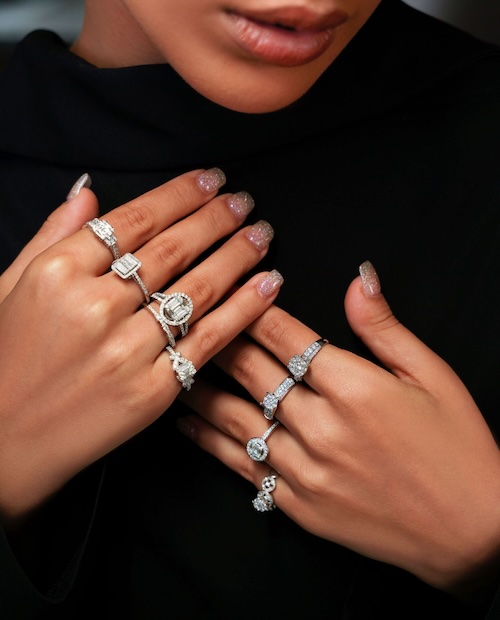
The engagement ring setting is just as important as the diamond! The setting is the framework that secures the stone (or stones) to the ring band. Popular settings include:
Solitaire Engagement Rings
Feature one stone set in the center of the band. Lets the center stone steal the show!
Halo Engagement Rings
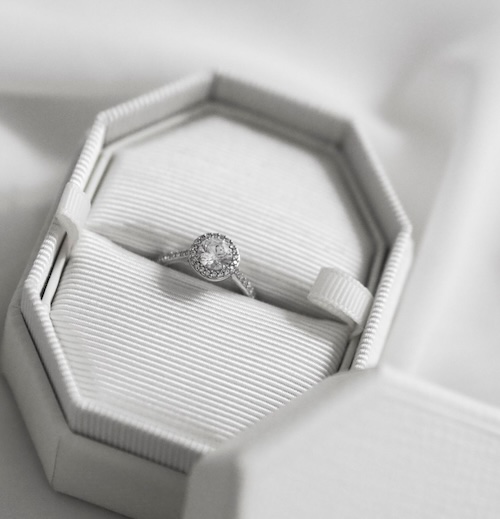
Feature a stone in the center of the band, with the face of the stone surrounded by a circle of smaller diamonds. Adds sparkle and increases the perceived size of the center stone.
Hidden Halo Engagement Rings
Feature a stone in the center of the band, with the base of the stone surrounded by a circle of smaller diamonds. Adds sparkle and increases the perceived size of the center stone, while being more subtle than a traditional halo setting.
Three-Stone Engagement Rings
Feature three stones, usually with a larger stone in the center and smaller stones on either side.
Pave Engagement Rings
Feature a ring band studded with many small, closely set diamonds.
Bezel Engagement Rings
Bezel settings encircle the center stone in metal, providing a highly secure setting that shows off the face of the stone.
Diamond Jewelry Beyond Engagement Rings
Diamond Earrings
Diamond earrings are a timeless jewelry staple that can be paired with absolutely anything in your closet. Versatile and beautiful, diamond earrings make a perfect gift, whether for yourself or for someone else.
Because diamond earrings are smaller than the diamonds used in engagement rings, you can usually choose diamonds with lower color or clarity grades because their flaws will not be easily visible. Popular diamond earring styles include:
Stud Earrings
These elegant, timeless earrings feature single diamonds, usually in prong settings. Choose your ideal carat size, taking personal style and practicality into consideration.
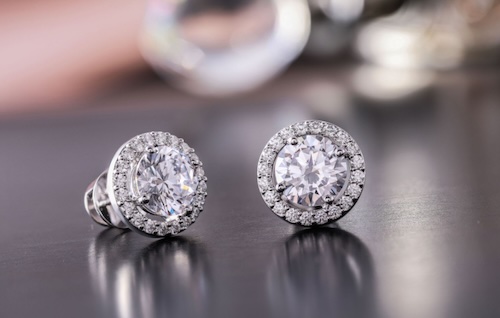
Halo Studs
Like traditional diamond studs, but with halo settings to add extra sparkle.
Hoop Earrings
Diamond hoop earrings enhance the ear with a ring of sparkle. Classic hoops feature diamonds on the outside of the hoop, while inside-out hoops sparkle with diamonds on both the inside and outside of the hoop. Huggie hoops are smaller hoop earrings that sit closer to the earlobe for easy, practical wear.
Drop Earrings
Drop earrings feature diamonds that dangle below the earlobe, usually attached to a stud.
Diamond Pendants and Necklaces
Just as versatile as diamond earrings, diamond pendants and necklaces are a fantastic way to wear the beauty of a diamond around your neck, front and center! They can be worn daily or for special occasions, and layered with other necklaces to create unique, customizable looks. They also make excellent gifts for birthdays, anniversaries, and other major milestones.
Popular diamond pendant styles include:
Solitaire Diamond Pendants
Timeless and versatile, they feature a single, unembellished diamond as the focal point. Solitaire pendants complement both casual and formal attire. They’re available in a wide range of diamond shapes and carat weights.
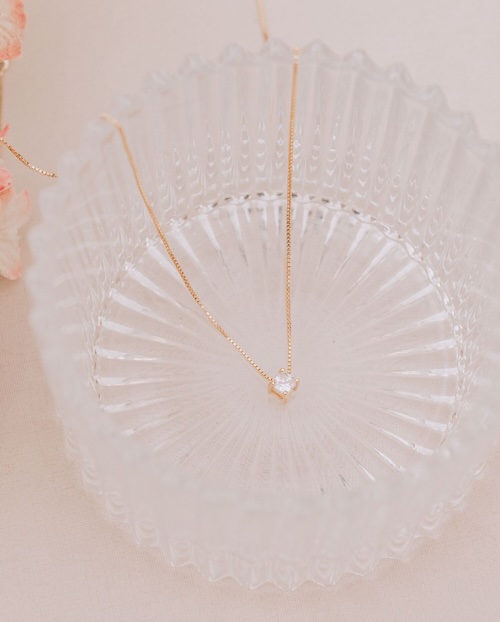
Halo Diamond Pendants
The center diamond is surrounded by smaller accent diamonds to create additional sparkle and add visual impact, making the center diamond appear larger. They’re a great option for those seeking a piece of jewelry with maximum brilliance and visual impact.
Diamond Station Necklaces
Feature multiple diamonds spaced evenly along a chain. Subtle, elegant, and versatile, these necklaces come in various lengths and are great for layering.
Diamond Bracelets
Popular styles include:
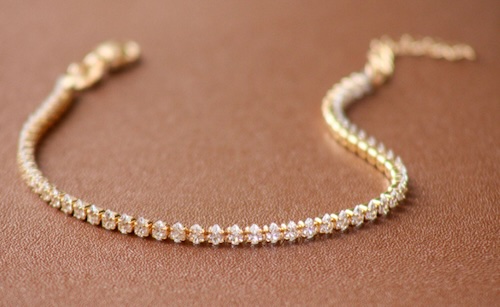
Diamond Tennis Bracelets
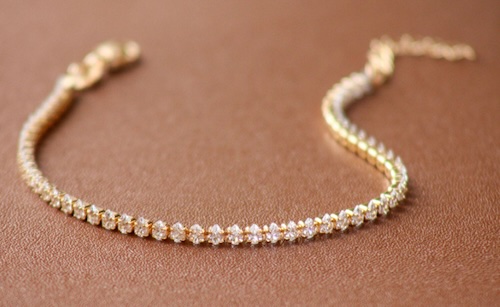
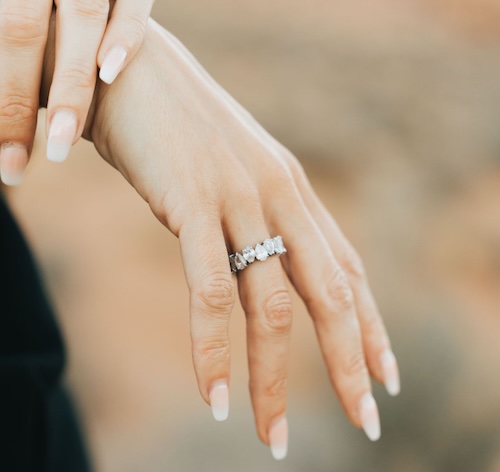
One of the most recognizable pieces of diamond jewelry, diamond tennis bracelets show off a continuous line of diamonds that wrap all the way around the wrist, creating an unbroken line of sparkle. Elegant, flexible, and versatile, they come in a wide range of styles and carat weights.
Diamond Bangles
A more rigid bracelet design, diamond bangles may feature a single diamond, a mix of diamonds and gems, or diamonds studded throughout the piece. These modern and sophisticated bracelets can be stacked or worn solo.
Diamond Cuffs
These rigid, open-backed bracelets are accented with diamonds and slip onto the wrist for easy wear. They come in an almost infinite range of styles and colors, so you can choose your own stylish adventure!
Anniversary and Milestone Jewelry
Diamond jewelry is associated with life’s most meaningful celebrations. The rarity, beauty, and value of a diamond makes it a symbolic gift that the recipient is sure to treasure for a lifetime. Whether commemorating a wedding anniversary, a graduation, or a milestone birthday, diamond jewelry serves as a lasting reminder of important moments, accomplishments, and shared memories.
Why Diamonds Are Ideal for Milestone Celebrations
Diamonds symbolize:
- Enduring love
- Lasting commitment
- Timeless memories
- Strength
- Beauty
- Achievement
Popular Diamond Gifts for Major Milestones
- Diamond anniversary bands. A beautiful gift for a wedding anniversary, a diamond anniversary band can be worn alongside an engagement ring and wedding band to remind the wearer that your shared love only grows with time.
- Diamond stud earrings. Timeless and versatile, diamond studs make a great gift for someone entering a new chapter of their life. No matter where the recipient goes next, diamond studs will be a sparkling companion!
- Diamond pendants. Diamond pendants allow the wearer to keep the diamond–and all the memories behind it–close to their heart every single day.
- Diamond tennis bracelets. A sophisticated gift for significant anniversaries, diamond tennis bracelets are the perfect balance between luxury and wearability.
Common Diamond Buying Mistakes to Avoid
Focusing Only on Carat Weight
Carat weight is not a make-or-break factor in determining your diamond’s beauty. We totally understand why people want higher carat weights–after all, there’s no such thing as too much diamond! But don’t sacrifice other important elements of your jewelry just to afford a higher carat weight, especially when there are other, less expensive ways to make your diamond look larger.
Ignoring Cut Quality
Don’t sacrifice cut quality to spend more money on another aspect of the diamond. Cut is the most important factor in determining diamond quality. It determines how well the diamond interacts with light and, in turn, how well the diamond sparkles. Sparkle can mask color and hide minor flaws within the diamond, and it can also make the diamond appear larger than it actually is. So, cut quality has the single biggest impact on the look of your diamond.
Overpaying for Color or Clarity
It’s important to pay attention to the color and clarity grades of your diamond, but it’s also important to remember that diamonds are graded under magnification. You won’t see tiny inclusions or faint color tints with your naked eye, so don’t overpay for a higher clarity or color grade that doesn’t affect how the diamond looks in person.
Buying Without Seeing the Diamond
Never, ever buy a diamond without seeing it in person! Seeing a diamond up close and in real life is the only way to truly see how it performs under various lighting conditions and from different angles. The real world is not set up like a studio to make a diamond look perfect, so don’t buy a diamond based on online pictures. Visit a trusted local jeweler instead, and view the diamond in real life.
Why Buy a Diamond from a Local Alabama Jeweler?
Personalized Service You Can’t Get Online
When working with a local jeweler, you get the privilege of one-on-one guidance and face-to-face consultations. You can meet with a jeweler in person and tour the store, checking out all of the rings we have available, viewing or trying them on at your leisure, and asking as many questions as you need to. After you purchase a ring, it’s easy to access a local jeweler–they’re right down the road!–if you have further questions or concerns, or if you need repairs or cleanings.
See Diamonds in Person Before Buying
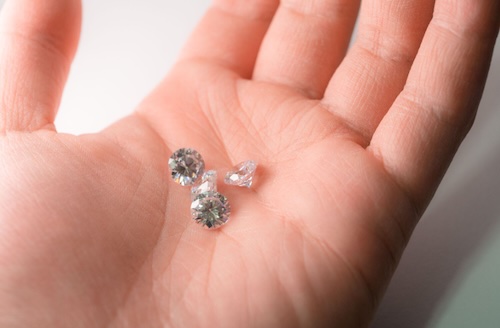
It’s impossible to truly see what a diamond looks like without seeing it in person. Sure, online retailers might offer lots of still images, but viewing a diamond up close is the only way to tell how a diamond performs under various lighting conditions as it moves through space. You’ll also be able to see what the ring looks like on a real hand, and there’s no substitute for that.
Expert Guidance from Trusted Professionals
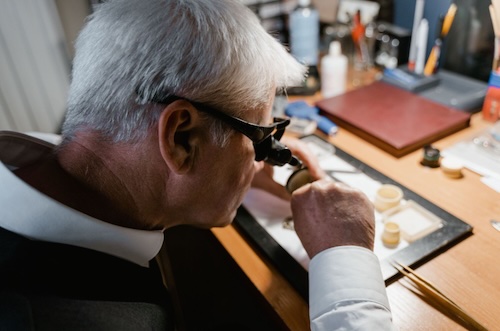
When you work with a local jeweler, you’re working with a team of professionals that has built a reputation in their community over decades of service. Local jewelers thrive on word-of-mouth reviews. Accountability isn’t just a personal value for them–it’s how they stay in business. For local jewelers, and especially multi-generational family-owned stores like Ware Jewelers, jewelry is a genuine passion. Earning your trust and appreciation is important to them, not just because it’s the right thing to do, but because it’s what they love to do!
Custom Design Services
Not seeing anything you like in the ready-to-wear jewelry cases? Local jewelers like Ware Jewelers can customize diamond jewelry, handcrafted just for you! Working with a local jeweler lets you meet one-on-one with custom design experts who can bring your dream jewelry to life.
Diamond Upgrades and Trade-In Programs
Many local jewelers, including Alabama’s own Ware Jewelers, offer diamond trade-up programs for rings purchased in their stores. Diamond trade-up programs let you trade in your old diamond jewelry, putting its value toward the cost of a new piece. It’s a great way to upgrade the carat size of your ring or favorite pair of diamond studs!
When younger couples first get married, or when young women buy their first pieces of fine jewelry, they don’t always have the funds to buy the carat size of their dreams. But as you grow and your finances improve, we believe you should have the chance to come back and upgrade your diamond! Diamond upgrades make especially nice anniversary gifts–hint, hint.
Jewelry Repair and Ongoing Care
Local jewelers (including Ware Jewelers) also offer discounts on services for jewelry purchased at their stores. This can include free cleanings and jewelry inspections to help you keep up on regular jewelry maintenance. And when your jewelry needs repairs, who better to work with than the jeweler that sold it to you in the first place?
Supporting Local Alabama Businesses
We’re proud to be rooted in Alabama, and we’re sure you are, too. Shopping local shows your Alabama pride and supports your community. When you contribute to your local economy, you help your neighbors put food on the table and make your hometown a better place to live.
Frequently Asked Questions About Buying Diamonds
How do I know if a diamond is a good value?
A diamond is a good value when it offers the optimal combination of beauty, quality, and affordability. It’s not all about carat weight. Many buyers focus on size alone, but experienced jewelers and informed shoppers know that lots of other factors, especially cut quality, have an equally important impact on a diamond’s sparkle and overall appearance. To evaluate a diamond’s value, look for:
- Excellent or Very Good cut quality.
- Eye-clean clarity (where inclusions aren’t visible to the naked eye)
- Near-colorless grades (G-J) that appear white to the naked eye
- Beauty when viewed in person
- A price comfortably within your budget.
What diamond shape looks the biggest?
Some diamond shapes appear larger than others even when they have the same carat weight. This is especially true for elongated diamond shapes, which have a larger surface area when viewed from above. Shapes that look bigger than their actual carat weight include:
- Oval
- Marquise
- Pear
- Emerald
- Radiant
- Elongated Cushion
In addition to diamond shape, cut quality and setting can impact the perceived size of the diamond. Alabama engagement ring shoppers who want to increase the visual weight of their diamond should consider settings like hidden halos or halos, and should always look for a diamond with a high cut quality.
What is the best diamond for an engagement ring?
There is no “best” diamond for an engagement ring, because the ideal diamond depends on your budget, aesthetic preferences, and lifestyle needs. For most buyers, the best engagement ring diamond will have:
- A shape that matches their personal style
- A carat weight that fits within their budget
- High cut quality
- A near-colorless appearance
- Eye-clean clarity
A well cut, eye-clean, near-colorless diamond in the 1 to 2-carat range provides excellent value for most Alabama diamond shoppers. During an in-store consultation, a local Alabama jeweler can help you compare options and find the diamond that best fits your needs.
Are lab-grown diamonds worth buying?
Lab-grown diamonds can be a great option for some buyers, especially those who want a larger diamond or higher quality diamond within a limited budget. Lab-grown diamonds have the same physical, chemical, and optical properties as natural diamonds, and they are graded using the same standards. Benefits of lab-grown diamonds include:
- Lower cost compared to natural diamonds
- Ability to purchase a larger stone for the same budget
- Identical sparkle and durability to natural diamonds
However, some buyers prioritize the symbolism, rarity, and lasting value of a natural diamond. The right choice depends on your personal needs and preferences. A knowledgeable Alabama jeweler can explain the advantages of both options and help you decide which aligns with your preferences and budget.
Can I finance an engagement ring?
Yes, many jewelry stores offer financing options and payment plans that allow customers to spread the cost of an engagement ring over time. Financing makes it easier to:
- Purchase the ring of your dreams
- Stay within your monthly budget
- Take advantage of promotional financing offers
- Avoid delaying your proposal
Financing programs vary by jeweler, so ask your jeweler about interest rates, minimum monthly payments, promotional offers, and credit approval requirements before you make your purchase.
How often should diamond jewelry be inspected?
Most professional jewelers recommend having your frequently worn diamond jewelry inspected every 6-12 months. This includes engagement rings, wedding bands, anniversary bands, and any other diamond jewelry you wear on a daily or near-daily basis. Regular inspections can help you catch:
- Loose stones
- Worn or damaged prongs
- Weak clasps
- Signs of metal wear
- Damaged settings
- And other potential repair needs
Catching these issues early can save you time, stress, and money in the future. In addition to professional inspection, diamond jewelry should also be cleaned regularly to maintain its sparkle and brilliance. You can get free cleanings and inspections for jewelry purchase at any of our Alabama jewelry stores–located in Auburn, Opelika, Montgomery, and Spanish Fort.
Find Your Perfect Diamond at Our Alabama Jewelry Stores
Diamond jewelry is one of the most beautiful, meaningful, and long-lasting purchases you’ll ever make. Understanding the 4 Cs, comparing different diamond shapes, and choosing the right setting can help you make a confident and informed decision, whether you’re buying an engagement ring, a pair of diamond studs, or a diamond tennis bracelet.
Work With Local Experts
Online research is a good place to start, but nothing compares to seeing diamonds in person and receiving personalized guidance from experienced professionals. At Ware Jewelers, we’re committed to helping our clients find the diamond jewelry that matches their style, budget, and long-term needs. Whether you’re shopping for natural or lab-grown, custom or ready-to-wear, our team is here to guide you every step of the way.
Visit One of Our 4 Alabama Locations
Ware Jewelers is proud to have locations in:
- Auburn
- Opelika
- Montgomery
- Spanish Fort
Visit our showrooms to explore our diamond jewelry collections, compare options side by side, and discover why Alabama families have trusted us to help them celebrate life’s most important milestones with the beauty of diamonds.