
Is there a proposal in your near future? If you need to start shopping for an engagement ring soon, but you aren’t sure where to begin, don’t worry–you’re not alone. In fact, most of the engagement ring shoppers who visit our Alabama stores come to us with lots of questions. The good news is, we have answers!
At our four family-owned Alabama stores, we help our clients find rings that balance quality, value, beauty, and personalization. The process starts with education. We walk our clients through all the information they need to purchase the right ring. In this blog, we’ll share that same information with you! Keep reading to learn more about setting a budget, understanding the 4 Cs of diamonds, choosing an engagement ring style, selecting the right metal, center stone options, and why shopping local matters.
- Setting Your Engagement Ring Budget
- Understanding the 4 Cs of Diamonds
- Choosing the Right Engagement Ring Style
- Selecting the Best Metal for Your Ring
- Center Stones: Natural Diamonds, Lab-Grown Diamonds, and Alternative Gemstones
- Why In-Person Shopping Matters for Alabama Couples
- FAQ
Setting Your Engagement Ring Budget
Always start the engagement ring shopping process by setting a solid budget. Ignore outdated rules for how much you “should” spend, and consider the many factors that impact ring price.
Forget the Three Months’ Salary Rule
Back in the day, conventional wisdom suggested spending three months’ salary on an engagement ring. But nowadays, shoppers have a wider range of salaries, more engagement ring options, and jewelers who are willing to work with them to fit any reasonable budget. So, throw away this outdated suggestion. Instead, tailor your budget to your financial health and to your shared priorities as a couple.
Factors That Impact the Price of an Engagement Ring
-
Diamond size: Obviously, bigger diamonds cost more money. Diamond prices increase exponentially at certain benchmark sizes, including 1 carat, 1.5 carats, and 2 carats. Round brilliant cut diamonds have the highest cost per carat, while other diamond shapes (such as pear, oval, or marquise) typically cost less.
-
Diamond quality: Diamonds are graded on their color, cut, and clarity. Diamonds with higher grades cost more.
-
Center stone type: Natural diamonds are usually the most expensive center stones, while lab-grown diamonds and colored gemstones are usually cheaper.
-
Ring setting: The more complex the ring setting, the more the ring will cost. Ring settings with diamond accents or intricate details will cost more than plain bands.
-
Metal type: Platinum rings are more expensive than gold rings.
-
Custom design features: Adding custom design elements to a ring will increase the cost.
Financing and Flexible Options
Many jewelers offer financing and payment plans to help clients afford their dream rings. At Ware Jewelers, we’re proud to offer financing options to qualified buyers. We will work with you to establish a payment plan that allows you to take home the perfect ring, even if you can’t pay full price upfront.
How Much Should I Spend on an Engagement Ring in Alabama?
As of 2026, the average cost of an engagement ring in Alabama is $5,255, but you can easily find a wide range of beautiful rings for any budget.
Understanding the 4 Cs of Diamonds
Cut
Cut describes the proportions and faceting of a diamond. Facets are the small planes cut into the diamond that bounce light throughout the stone and reflect it back as sparkle. The most important proportions of a diamond are depth, width, and table size. Cut is what gives a diamond its brilliance. A well cut diamond absorbs a lot of light and bounces it across facets to create stunning sparkles. Most jewelry experts consider cut the most important factor when evaluating a diamond’s beauty.
Color
Perfectly white diamonds are extremely rare, and most diamonds have a slight tint. It’s usually invisible, or at least very hard to see, with the naked eye. Diamond color is graded on a scale from D-Z. Grades are as follows:
-
D-F: Colorless
-
G-J: Near Colorless
-
K-M: Faint
-
N-R: Very Light
-
S-Z: Light
Most engagement ring diamonds fall in the G-J range. These diamonds show almost imperceptible color, but are much more affordable than true “colorless” D-F diamonds. The best way to judge the color of a diamond is to see it in person.
Clarity
Most diamonds have some minuscule flaws. Flaws are divided into two categories: blemishes (external flaws) and inclusions (internal flaws). The majority of these are invisible to the naked eye. Jeweler-grade diamond clarity uses the following categories:
-
Flawless: These diamonds have no flaws visible under 10x magnification. They are extraordinarily rare.
-
Internally Flawless: These diamonds have no inclusions, but may have minor blemishes visible at 10x magnification.
-
Very, Very Slightly Included (VVS1-VVS2): These diamonds have minor inclusions that are barely visible at 10x magnification.
-
Very Slightly Included (VS1-VS2): These diamonds have minor inclusions that are visible at 10x magnification.
-
Slightly Included (SI1-SI2): These diamonds have slight inclusions that are clearly visible at 10x magnification, and may be noticeable to the naked eye.
-
Included (I1-I3): These diamonds have obvious inclusions that impact the stone’s clarity and brilliance. The inclusions may be visible to the naked eye.
Carat
Carat is a measure of diamond weight. One carat is equal to 200 milligrams, or about 1/5th the weight of a standard paperclip. It’s very common for buyers to have a particular size in mind when they visit our store to buy an engagement ring. We do our best to meet those expectations while also fitting the client’s budget. However, it’s important to remember that carat size is not the only indicator of quality. A smart shopper balances cut, color, and clarity grades alongside carat weight.
What Is the Most Important Diamond Quality Factor?
Cut is the most important factor in determining a diamond’s quality. It has the biggest impact on a diamond’s brilliance. A high-quality cut can disguise other flaws in the diamond and can even make diamonds look larger than they really are. For much more information on the 4 Cs, check out our diamond buying guide.
Choose the Right Engagement Ring Style
Today’s shoppers have more styles than ever to choose from! Here are some of the most popular styles in Alabama, a mix of timeless classics and bold, trendy looks:
Solitaire Engagement Rings
Solitaire engagement rings feature one center stone, letting that diamond steal the spotlight! Elegant, understated, and timelessly beautiful, they are the most classic engagement ring style.
Halo Engagement Rings
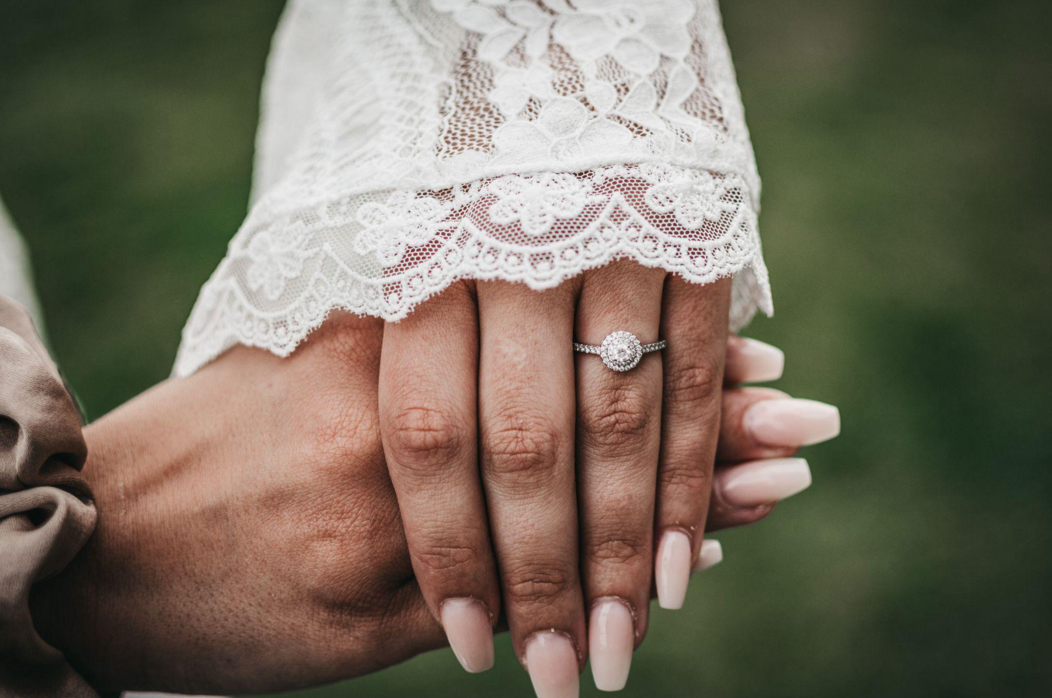
There are two types of halo engagement rings. The traditional halo engagement ring features a ring of small diamonds encircling the face of the center stone. The hidden halo engagement ring features a ring of diamonds encircling the base of the center stone. Both designs add sparkle and increase the visual weight of the center diamond, but the traditional halo is flashier, while the hidden halo is more subtle.
Three-Stone Rings
Three-stone engagement rings feature two smaller stones flanking the center diamond. The side stones are often a different shape or orientation than the center stone. Popular combinations include oval center diamonds with east-west pear cut side stones, oval center diamonds with round side stones, and emerald cut center diamonds with baguette cut side stones.
Bezel Engagement Rings
Bezel settings securely hug the center stone in a ring of metal. They have a glamorous, vintage vibe and are particularly popular in yellow gold. Diamonds of any shape and size look great in a bezel setting.
Custom Engagement Rings
Customization may be the biggest engagement ring trend of the 2020s. Work with a jeweler to create a custom engagement ring from scratch or add unique personal elements to a ready-to-wear ring. There’s no better way to capture what makes your partner (and your shared love story) so special.
Selecting the Best Metal for Your Ring
The precious metal you choose will have a big impact on the cost, durability, and appearance of your engagement ring. The most popular precious metals for engagement rings are gold and platinum.
Gold Engagement Rings
Gold engagement rings are durable, classic, and come in multiple stunning colors. Because pure, 24k gold is very soft, most engagement rings come in stronger 14k-16k gold.
-
White gold is sleek and classic. It can even increase the perceived size of the center stone by emitting its own bright shine that adds to the diamond’s sparkle. However, white gold is plated with rhodium to improve its durability and brightness. Over time, rhodium wears off, so white gold rings need to be replated once every few years.
-
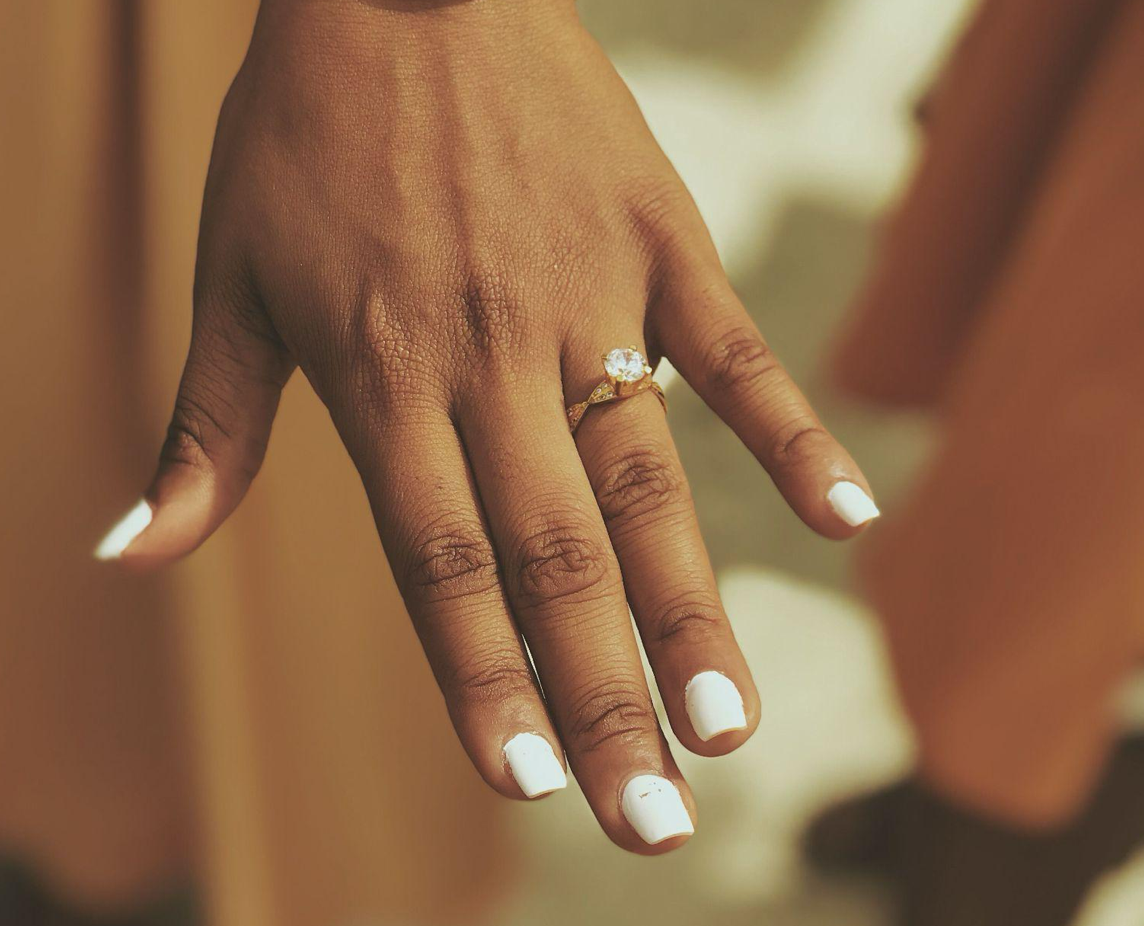
Yellow gold is elegant and romantic. It never goes out of style, but its warm, glowing, vintage look has surged in popularity over the past few years.
-
Rose gold is trendy, modern, and fun. Rose gold rings range from champagne pinks to deep blush tones, giving brides plenty of options to choose from.
Platinum Engagement Rings
Platinum is the other main option for engagement rings. Platinum is even stronger than gold. It also maintains its bright white luster without needing to be replated. Platinum is more expensive up front, but has lower maintenance costs over time.
The Best Choice for You
When choosing the best metal for your ring, consider color preferences, maintenance, and durability. If you prefer warm tones, yellow gold or rose gold may be your style. If you like sleek, bright whites, you may prefer white gold or platinum. For a lower-maintenance ring, choose platinum or a gold tone that won’t have to be replated (yellow or rose). And for maximum durability, opt for a platinum ring.
Center Stones: Natural Diamonds, Lab-Grown Diamonds, and Alternative Gemstones
Deciding between a natural diamond, lab-grown diamond, or alternative gemstone is perhaps the most important choice you’ll make when buying an engagement ring. Each option has its pros and cons.
Natural Diamonds
Natural diamonds are the most expensive of the center stone options. This is because they are the strongest, most brilliant, and rarest gems on earth. Natural diamonds form far beneath the earth over the course of millions of years, and only under perfect conditions. They are universally associated with romance, commitment, and beauty. Natural diamonds are likely the rarest, oldest things you will ever hold in your hand.
Lab-Grown Diamonds
Lab-grown diamonds are visually, physically, and chemically identical to natural diamonds. While natural diamonds take millions of years to form, lab-grown diamonds are produced in a lab within a matter of weeks. Because they are not as rare, they are less expensive than natural diamonds. However, this also means they don’t hold their value over time. While natural diamonds appreciate in value, lab-grown diamonds depreciate. But, some couples don’t mind this trade-off.
Alternative Gemstones
You don’t have to choose a diamond as the centerpiece of your ring. Increasingly, couples are choosing colored gems as their center stones. While there are plenty of beautiful and unique gemstone options available, be sure to choose a stone that is hard enough to withstand daily wear.
Diamonds are the hardest mineral on earth, so they don’t chip or scratch under normal circumstances. Other hard gemstones are sapphires, rubies, and emeralds. Softer stones like opals, amethysts, and pearls do not make good center stones for engagement rings.
Are Lab-Grown Diamonds Real Diamonds?
Yes. Lab-grown diamonds are physically, chemically, and visually identical to diamonds. Like natural diamonds, lab-grown diamonds are created by exposing carbon atoms to high heat and high pressure. Scientists mimic these conditions in a laboratory environment using high pressure, high temperature chambers. The results are stunning, durable, affordable lab-grown diamonds.
Why In-Person Shopping Matters for Alabama Couples
These days, plenty of online retailers offer engagement rings. But visiting a jewelry store in person is still the best way to buy a diamond.
What Online Shopping Can’t Replicate
No matter how many pictures online retailers take, nothing compares to seeing a diamond in person. Studio lighting shows off the best aspects of a diamond, but how does that diamond perform under real-world conditions? By visiting a local jeweler, you’ll be able to see how a diamond looks in various types of lighting. You can move it around and even try it on to watch it sparkle from every angle. Visiting a jewelry store in person also allows you to compare diamonds side-by-side. If you aren’t sure exactly what you want, or if you’re curious about a few different styles, then side-by-side comparison will be crucial in helping you make your decision.
Of course, there’s also a big benefit to working in person with a local jeweler. You’ll get one-on-one time with a professional, immediate answers to your questions, and the kind of expert guidance you can only find with a truly passionate team of jewelers.
The Advantages of Shopping Local
Beyond the one-on-one attention, working with a local jeweler means you’ll get ongoing support after you make your purchase. Long after you walk out the door, your jeweler will be there to help you with any future needs. Whether you need maintenance, ring resizing, a professional cleaning, an appraisal, an engraving, or a diamond upgrade, your local jeweler will be there to assist you.
Ware Jewelers Is Here to Help You Find Your Dream Ring
When shopping for an engagement ring, start by setting a realistic budget. Familiarize yourself with the 4 Cs of diamond quality, popular engagement ring styles, and your options for different metals and center stones. Finally, come visit your trusted, local Alabama jewelers to compare your options and ask questions in person!
Engagement ring shopping should be a low-pressure, enjoyable experience–even if you have no idea what you’re doing. At Ware Jewelers, it’s our job–and our passion–to help all of our customers find a ring that suits their budget, lifestyle, and tastes. Want to create a custom engagement ring from scratch? Worried about what you can afford on your budget? Shopping for a partner with very particular preferences? We can help with all of that, and more.
To get started, visit one of our Alabama locations in Auburn, Opelika, Montgomery, or Spanish Fort for a one-on-one, in-depth engagement ring consultation with one of our jewelry experts!
Frequently Asked Questions
How long does engagement ring shopping take?
It depends on what you are shopping for! If you are looking for a ready-made ring, you may be able to find it and have it properly sized within a week! Custom engagement rings, on the other hand, usually take 6-8 weeks to create. Start shopping at least 3 months in advance of when you plan to propose. Even if you aren’t creating a custom ring, you want to allow plenty of time for resizing, shipping, and any unexpected hiccups in the process.
Should I insure my engagement ring?
Yes, you should absolutely insure your engagement ring. Engagement rings are significant purchases, and they should be protected in the event of loss, theft, or damage.
Can I customize an engagement ring?
Yes, you can absolutely customize an engagement ring! In fact, it’s increasingly common. You can customize a ring to whatever extent you would like. Add small personalized details to a ready-to-wear ring, design a custom ring setting, or create a one-of-a-kind ring entirely from scratch.
What if I don’t know my partner’s ring size?
If you don’t know your partner’s ring size, ask her family and friends, or bring another ring of hers into a jeweler for sizing. If she’s comfortable with it, you can even go ring shopping together! We don’t recommend using online “hacks” to secretly find her ring size, as they are often inaccurate. In the worst case scenario, you can always bring an engagement ring back to your local jeweler for a quick resizing.
Do jewelers offer ring cleaning and inspections?
Yes, most local jewelers offer ring cleaning and inspection services. Many jewelers, including Ware Jewelers in Alabama, offer these services for free on any jewelry purchases made at their stores.
Can I finance an engagement ring?
Yes, most local jewelers allow qualified buyers to finance engagement rings or set up payment plans to let you take home your dream ring as soon as possible, even if you don’t have the full payment up front.